Mercedes Locks In Supplier Cuts as Use-Phase Pledge Turns Conditional
Mercedes-Benz has firmed up the targets it controls and made the one that dominates its footprint depend on how fast buyers switch to electric cars.
The largest slice of Mercedes-Benz’s carbon footprint now carries a condition. Under a revised Ambition 2039 pathway published on 10 November, the 80% cut in vehicle use-phase emissions applies only as market conditions allow, while targets for factories and materials remain fixed.
Use Phase Carries Three-Quarters of the Footprint
The distinction matters because of where the emissions sit. In the company’s 2026 Climate Transition Action Plan, group emissions totalled 49.3 million tonnes of CO2 in 2025, down from 53.8 million in 2019. The use phase accounted for 36.7 million tonnes, roughly 74% of the total. Own production accounted for 0.3 million tonnes, under 1%.
A firm 90% production target therefore governs a sliver of the footprint. The conditional target governs most of it. The overall goal is a 70% cut across relevant value chain stages by 2039 against 2019, and net zero has moved to the 2040s. Earlier versions of Ambition 2039 described a carbon-neutral new car fleet by 2039.
Aluminium Deal Targets Rising Supply Chain Emissions
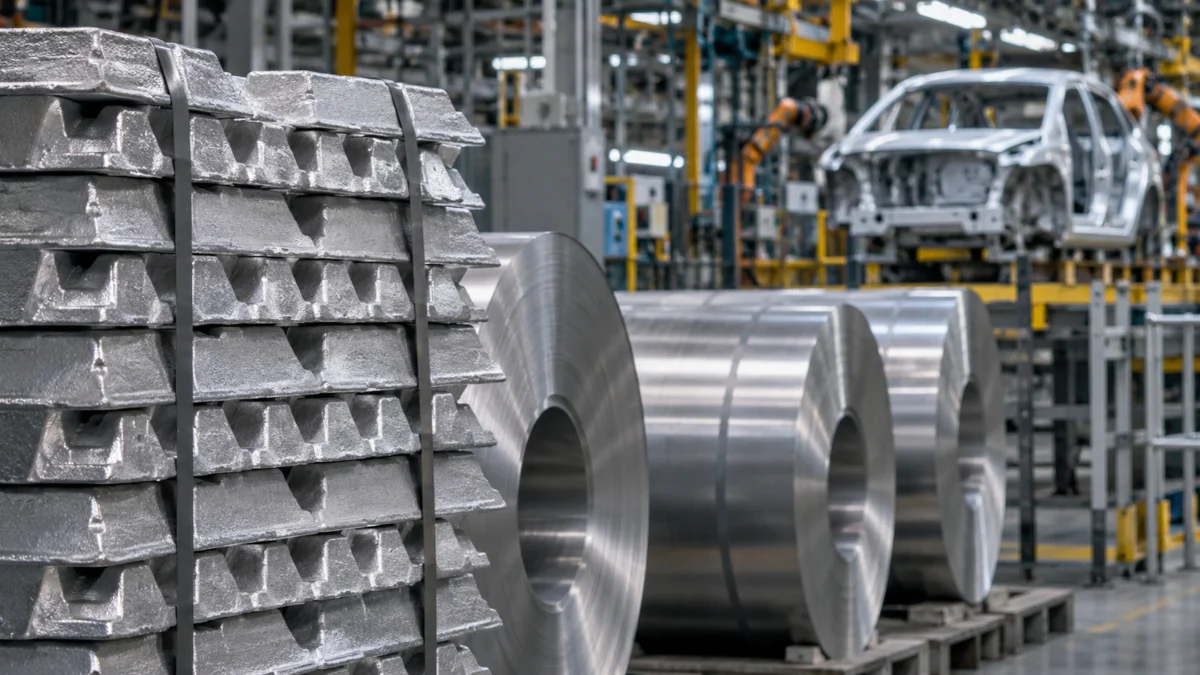
The concrete step in the update is upstream. Mercedes-Benz signed a binding offtake agreement with Norwegian producer Hydro for at least 10% of its primary aluminium from 2026. The contracted footprint falls from about 4.0 kg of CO2e per kg of aluminium to 3.5 kg in 2028 and 3.0 kg from 2030. Recycled Hydro Circal metal follows in 2027.
The company also joined the First Movers Coalition, whose aluminium members commit to buying at least 10% of primary volumes below 3 tonnes of CO2e per tonne by 2030. Jörg Burzer, Chief Technology Officer for Development and Procurement, described the metal as “one of the most important levers in our supply chain.”
The supply chain is where Mercedes is losing ground. Its own figures show supply chain emissions rose from 9.7 million tonnes in 2019 to 11.1 million in 2025, as battery-heavy electric models add embedded carbon. Steel work is less advanced: a pilot with Anglo American and HyIron produced hydrogen-reduced iron for a demonstrator EQS part, with industrial-scale testing still to come.
The circularity target, 40% secondary raw materials within the next decade, supports the same shift toward emissions the company can contract for directly.
What the Split Signals for Carmakers and Suppliers
The revision moves accountability in two directions. Responsibility for the use phase shifts outward, to regulators, charging infrastructure and consumer demand. Responsibility for materials shifts inward, onto procurement contracts that suppliers must meet.
For investors, the conditional clause weakens the comparability of the headline 70% figure. A target that applies as market conditions allow cannot be tested against a fixed trajectory, which complicates assessments under frameworks that reward science-based, unconditional goals.
For Indian operations, the plant-level story is already largely written. Mercedes-Benz India’s Chakan facility near Pune has run entirely on renewable energy since 2022 and assembles electric models including the EQS SUV. That illustrates the point: decarbonising assembly is achievable, but assembly is not where the emissions are.
The harder exposure sits with Indian materials suppliers. Primary aluminium in India relies heavily on coal-based captive power, placing most domestic output well above the 3 tonne threshold that First Movers buyers are adopting. Vedanta markets a low-carbon line under its Restora brand, and NITI Aayog published a Roadmap for Aluminium Sector Decarbonisation in January 2026. Whether Indian smelters can supply certified low-carbon metal at scale will decide if they compete for export-linked automotive contracts or cede them to producers with hydro-powered smelters.
What to Watch
The 2026 annual report will show whether supply chain emissions keep rising despite the Hydro contract. The second marker is whether other European carmakers adopt similar conditional language on use-phase targets, which would signal an industry-wide retreat from fleet-level pledges. For Indian suppliers, watch for First Movers Coalition buyers naming Indian smelters in offtake agreements, and for certification standards under NITI Aayog’s aluminium roadmap.
For more climate news click here