Climate Central: India Leads Asia in Heat Exposure Added by Climate Change
Attribution data now puts a number on India's heat exposure, but heatwaves still sit outside the notified disasters that unlock relief funds.
Climate change added 30 or more days of dangerous heat for 117 million people in India between June and August 2026, the largest such exposure in Asia, according to a Climate Central analysis released on September 16. The figure arrives in a country that does not notify heatwaves as disasters, a status that often blocks access to relief funding.
Climate Central built the estimate with its Climate Shift Index, which compares observed temperatures with a modelled world without human-caused warming. It counts a day as risky heat when the temperature exceeds the 90th percentile of local readings for 1991 to 2020, a level the organisation ties to the point where the danger of sickness and mortality from heat climbs sharply. The run covered 252 countries and territories and 949 cities.
Globally, more than 1.5 billion people faced 30 or more such days that climate change added, and 54 countries logged their hottest June to August in the record running from 1970 to 2026.
India Leads Asia in Climate-Added Heat Exposure, Ahead of China and Indonesia
Climate Central puts China at 94 million and Indonesia at 83 million, behind India's 117 million. Against a population of about 1.48 billion (UN World Population Prospects, 2024 Revision), India's figure is roughly 8%. That share deserves plain statement: the metric counts people who passed a 30-day threshold on days made hotter by warming, not everyone who suffered heat this summer. Reading it as a headcount of Indians harmed by heat would misstate what the study measures.
A Separate Attribution Study Shows Heat Falls Outside Relief Funding
World Weather Attribution, an international group of climate scientists, examined the 15-day heatwave that struck northwestern India and Pakistan from 15 to 29 April 2026. It concluded that climate change made an event of that kind about three times as likely, and India recorded 37 or more deaths attributed to the heat. The study also notes that neither country notifies heatwaves as a declared disaster, so disaster relief funds can be out of reach.
The event pushed electricity demand across India to record highs, with daily maximums above 46°C in many cities and agricultural drought over more than 1 million square kilometres, WWA reported. Record demand ties the heat story to grid planning, a link the exposure count alone does not capture. The two analyses measure different things, a seasonal exposure count and a single event. They point to the same gap: attributed harm without a matching financing channel.
Outdoor Workers and Informal Settlements Face the Sharpest Risk
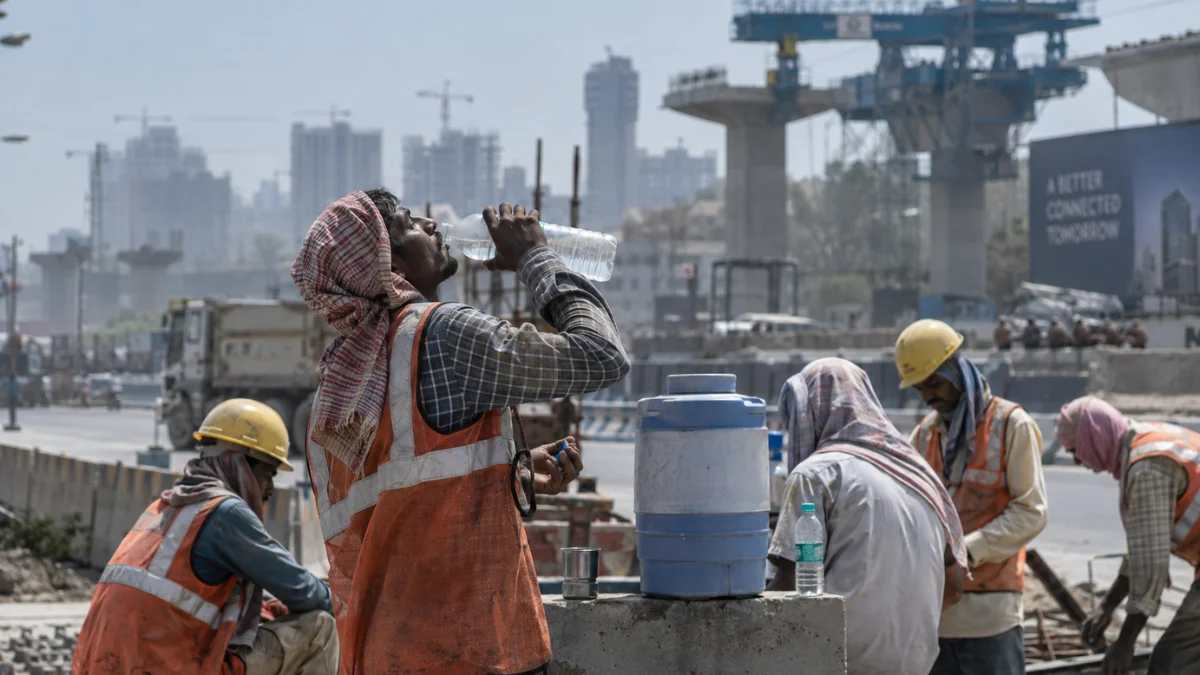
WWA identifies outdoor workers, daily wage earners and residents of informal housing as disproportionately vulnerable. Its recommendations centre on long-term resilience, urban retrofitting and tailored guidelines for putting heat action plans into practice, not emergency response alone. For ESG and physical-risk analysts, the Climate Central metric is a standardised, attributable exposure measure. It is not a loss estimate, and the figures reported here put no rupee value on lost productivity or damaged assets.
What to Watch
The first test is whether the Centre or state governments move to notify heatwaves as a disaster, the change WWA links to relief eligibility. The second is the pre-monsoon season of March to May 2027, when heat action plans will again be measured against outcomes. Climate Central's next seasonal exposure report will show whether 117 million is a ceiling or a floor for India.
For more climate news click here