Oracle Says Wind Deal Avoids 1.8 Million Tonnes of CO2 Yearly
Hyperscalers are turning power purchase agreements into the proof point for AI growth, and how a contract is built now matters as much as how large it is.
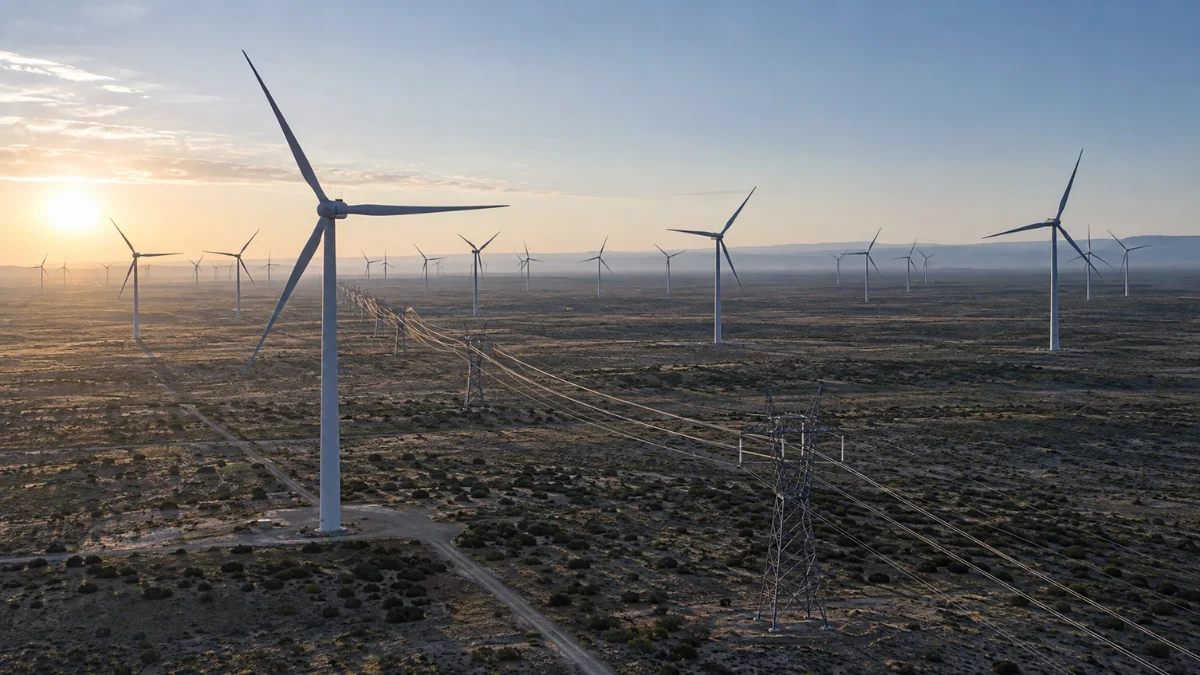
More than 1.7 GW of Texas wind capacity is now contracted against the electricity use of Oracle's AI data centers, across ten projects that the company says avoid 1.8 million tonnes of CO₂ a year. Oracle disclosed the agreements this week and named Clearway Energy, ENGIE, RWE and Scout Clean Energy as its counterparties.
Oracle's target covers custom AI data centers only, a scope that leaves the rest of its operations outside the commitment as described. Mahesh Thiagarajan, executive vice president of Oracle Cloud Infrastructure, says the company has set a goal to "match 100 percent of AI data center electricity use with carbon-free electricity" by 2035.
Ten Texas Wind Projects Sit Behind the 1.8 Million Tonne Claim
The portfolio supplies the ERCOT grid, the Texas system that also serves Oracle's Abilene data center campus. Oracle derives the avoided emissions from expected annual generation set against ERCOT grid emissions factors, and equates the output to the yearly consumption of more than 525,000 U.S. homes.
Data Center Dynamics describes the deals as virtual power purchase agreements. Under that structure Oracle settles the contracts financially against wholesale prices and does not take physical delivery of the wind power. The outlet also reports that Oracle has a request for proposals out for 2 GW of new solar, wind and geothermal capacity in New Mexico.
Additionality and Matching Method Determine How Much the Deal Counts
A virtual contract can support a carbon-free claim without adding a single turbine. Data Center Dynamics reports that the three RWE wind farms involved, in Sterling, Howard and Glasscock counties, began operating in 2008 and 2009. Contracts on existing wind improve a buyer's reported position, though the effect on grid emissions is smaller than the same volume of new-build capacity would deliver.
The published coverage does not say whether Oracle measures matching annually or hour by hour. Annual matching lets generation and consumption fall at different times of day, while hourly matching does not. According to the GHG Protocol, its proposed Scope 2 revision would add hourly matching and deliverability requirements for market-based reporting, with a final standard expected in 2027.
Developers Gain Buyers While Oracle Takes On a Disclosure Test
The four developers gain a corporate counterparty for wind output, and owners of older fleets gain one for capacity built well before AI-driven demand. Oracle has set a public benchmark against which its next tranche will be judged. The New Mexico request for proposals is where new capacity, and therefore additionality, could be shown.
India's data centre operators face the same matching question under different mechanics. Climatora reported on September 17 that water demand from the country's data centres is set to double. Corporate power procurement in India runs largely through open access and captive arrangements, which involve physical delivery over the grid, not the financial settlement used in the Texas contracts.
What to Watch
The New Mexico request for proposals is the first test: awards to new-build projects would answer the additionality question, while awards to existing fleets would repeat it. Oracle has yet to disclose contract tenors or whether its 2035 target is measured annually or hourly, and either detail would change how investors read the 1.8 million tonne figure. The GHG Protocol's second consultation on Scope 2 is scheduled for 2026, and its outcome will set the accounting rules these contracts are judged under. For India, the open question is whether data centre developers can secure comparable clean supply under open access rules as capacity expands.
For more climate news click here