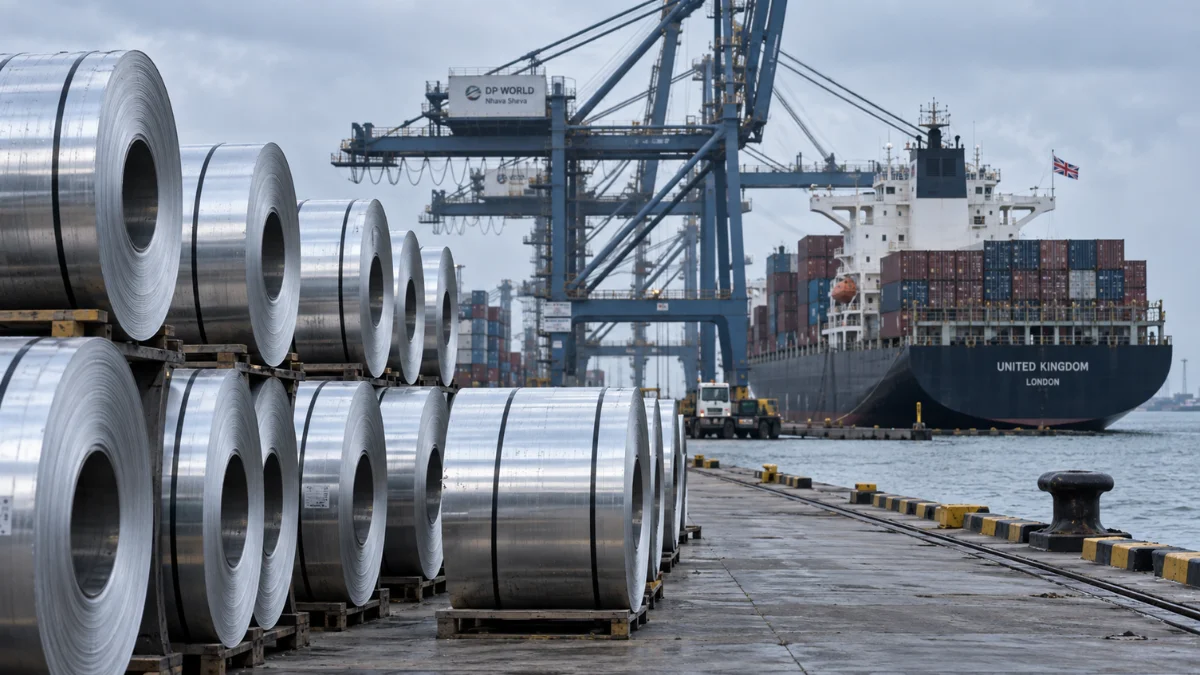
Iron and Steel Excluded as UK Recognises India's Carbon Market
Before Britain's carbon border tax takes effect in 2027, HM Treasury has pre-qualified a compliance market that has not completed a single trade, a bet on India's carbon price that arrives well ahead of the price itself.
UK importers of Indian aluminium and cement will be able to deduct the carbon price paid under India's Carbon Credit Trading Scheme (CCTS) from their liability under Britain's incoming Carbon Border Adjustment Mechanism (CBAM). HM Treasury added CCTS to its list of qualifying carbon pricing mechanisms this week, according to Business Standard and PTI.
The UK's CBAM takes effect January 1, 2027, applying a carbon-equivalent charge to imports of iron and steel, aluminium, fertilisers, hydrogen, ceramics, glass and cement. The mechanism is meant to stop production shifting to countries with weaker carbon pricing, by charging importers the gap between the exporting country's carbon price and Britain's own.
The decision follows the India-UK Comprehensive Economic and Trade Agreement, signed July 15, 2026, and lands against $25.1 billion in merchandise trade between the two countries in FY2025-26. HM Treasury communicated the CCTS inclusion to India's Ministry of Power and Commerce Ministry this week.
CCTS Covers Aluminium and Cement, Not Yet Iron and Steel
India's CCTS entered binding compliance for seven energy-intensive sectors in FY2025-26: aluminium, cement, chlor-alkali, pulp and paper, petroleum refining, petrochemicals and textiles, covering roughly 490 industrial entities against a FY2023-24 baseline, according to the International Carbon Action Partnership. Iron and steel and fertiliser, the two sectors CBAM's product list was largely built around, were also designated for CCTS coverage, but their emission intensity targets are still pending from India's environment ministry.
That gap matters for exporters. Aluminium and cement shipments to the UK now have a domestic carbon price to point to. Steel does not, despite being the CBAM category most exposed to UK-bound trade.
First Carbon Credit Trades Are Still Weeks Away
Entities under CCTS met their first compliance deadline on July 31, 2026, but no Carbon Credit Certificate has yet traded on India's power exchanges. Trading is now expected to begin around October 2026, later than the mid-2026 start originally recorded by carbon market trackers. Estimates put the eventual clearing price anywhere between ₹250 and ₹1,500 per tonne of CO2 equivalent, depending on how sectoral supply and demand settle.
Until a trade actually clears, the figure UK customs authorities will use to calculate CBAM relief does not exist. HM Treasury has recognised a mechanism, not a price.
Aluminium and Cement Exporters Gain Ground, Steel Producers Wait
The immediate winners are Indian aluminium and cement producers exporting to the UK, who can now point regulators to a government-recognised domestic carbon price once CBAM charges apply. Steel producers, who account for a larger share of UK-bound CBAM-relevant trade, gain nothing from this recognition until iron and steel receives its own CCTS targets.
The move also sets a precedent. This is the first instance of a foreign government formally treating CCTS as CBAM-qualifying, ahead of the EU, whose own CBAM entered its definitive phase without extending India comparable recognition. That gives New Delhi a reference point to press Brussels for similar treatment.
What to Watch
Two dates matter more than this week's announcement. Whether iron and steel receives its emission intensity targets before CBAM takes effect on January 1, 2027 will decide if India's largest CBAM-exposed export sector gets the same relief aluminium and cement now have. And the price at which Carbon Credit Certificates actually clear when trading begins, near the ₹250 floor or the ₹1,500 ceiling of current estimates, will decide how much this week's recognition is actually worth to exporters.
For more climate news click here