Delhi's EV Policy 2.0 Mandates 30% Fleet Electrification by 2030
Delhi's shift from subsidy-driven EV promotion to phased petrol registration bans marks a harder regulatory line, one other Indian cities are likely to study before adopting.
New petrol three-wheelers and N1 category trucks will lose registration eligibility in Delhi from January 1, 2027, with two-wheelers following on April 1, 2028, under the city's EV Policy 2.0, which took effect July 1, 2026 and runs through March 31, 2030.
A Mandate Model Replaces Incentive-Only Promotion
For most of the past decade, Indian EV policy leaned on purchase subsidies and tax breaks to pull buyers toward electric vehicles, leaving the pace of adoption largely to market response. Delhi's new policy inverts that logic. Rather than waiting for incentives to shift demand, it sets an expiry date on new petrol registrations for specific vehicle categories, converting a voluntary transition into a scheduled one.
The distinction matters for manufacturers and dealers planning inventory and product timelines. A subsidy can be adjusted or withdrawn without disrupting existing sales channels. A registration cutoff cannot: it forces a hard pivot in what can legally be sold as new, on a fixed calendar the industry did not set.
Fleet Targets Extend Beyond Private Vehicles
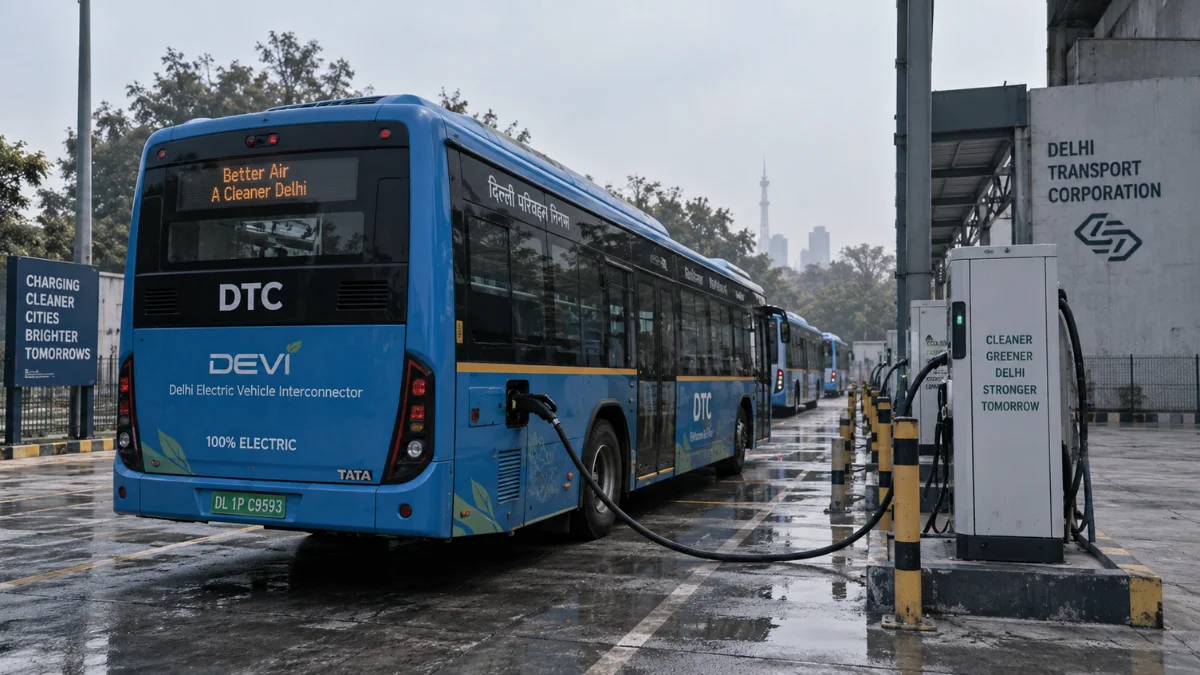
EV Policy 2.0 sets an overall fleet electrification target of 30% by 2030, and requires school bus operators to convert 10% of their fleets to electric within two years. The Delhi Transport Corporation is already running part of that transition through its DEVI buses, 9-metre electric vehicles introduced in May 2025 for last-mile connectivity routes.
Extending the mandate to school transport signals the policy is not confined to passenger cars or two-wheelers, the categories that usually dominate EV headlines. It reaches into procurement decisions made by school administrators and transport contractors, a segment with less public visibility but steady, recurring vehicle turnover.
Charging Infrastructure Is the Policy's Dependency
The plan calls for more than 30,000 public charging points by 2030, a buildout the registration bans depend on. A two-wheeler owner barred from registering a new petrol vehicle in 2028 needs a functioning charging network in place well before that date, not after it.
Implications: A Compressed Timeline for Suppliers, an Open Question on Enforcement
The immediate pressure falls on two-wheeler and three-wheeler manufacturers and dealers still selling petrol models in Delhi, who now have a fixed runway rather than an open-ended market. Electric two- and three-wheeler makers gain a demand floor set by regulation rather than subsidy cycles, a more durable signal for production planning.
What the policy does not resolve is enforcement and pace matching. Charging infrastructure, grid capacity, and vehicle registration deadlines all need to move in step: a shortfall in charging points by 2027 would leave the three-wheeler and truck ban ahead of the infrastructure meant to support it. The policy document sets targets; it does not yet specify penalties or contingency measures if the charging rollout lags the registration calendar.
What to Watch
Whether Delhi publishes an interim charging infrastructure progress report ahead of the January 2027 three-wheeler deadline will be the first real test of whether the policy's phasing is realistic. Watch also for whether other Indian cities reference Delhi's registration-ban model, rather than the subsidy-only approach, when their own EV policies come up for renewal before 2030.
For more climate news click here