Magna Raises Stake in India Battery Swap Venture Yuma Energy
A global auto-parts supplier just deepened its bet on Indian battery swapping rather than making a first-time one, and the company it backs used the same week to buy the battery maker it had been quietly partnering with for 18 months.
Yuma Energy, the battery-swapping joint venture between Canadian auto supplier Magna International and Yulu, India's largest shared electric mobility company, has raised a $35 million Series A led by Magna. The round increases Magna's ownership stake, previously 51% against Yulu's 49%, though the new split has not been disclosed.
A Deepening Position, Not a New One
Magna's total investment in the venture now stands at roughly $87 million including this round, building on an initial $52 million commitment in 2022. That history matters for reading this deal correctly: it is a strategic auto-parts manufacturer increasing control of an existing Indian EV-infrastructure bet, not a financial investor making a fresh entry.
Vertical Integration via Grinntech
In the same announcement window, Yuma acquired Grinntech Motors & Services, a Chennai-based battery technology company founded in 2013 by IIT alumni, with in-house capabilities in thermal design, mechanical design, battery management systems and pack assembly. The acquisition formalizes a partnership the two companies had already run for 18 months, including a jointly developed battery unveiled at the Bharat Mobility Global Expo in January 2025. Financial terms were not disclosed.
Yuma's Current Scale
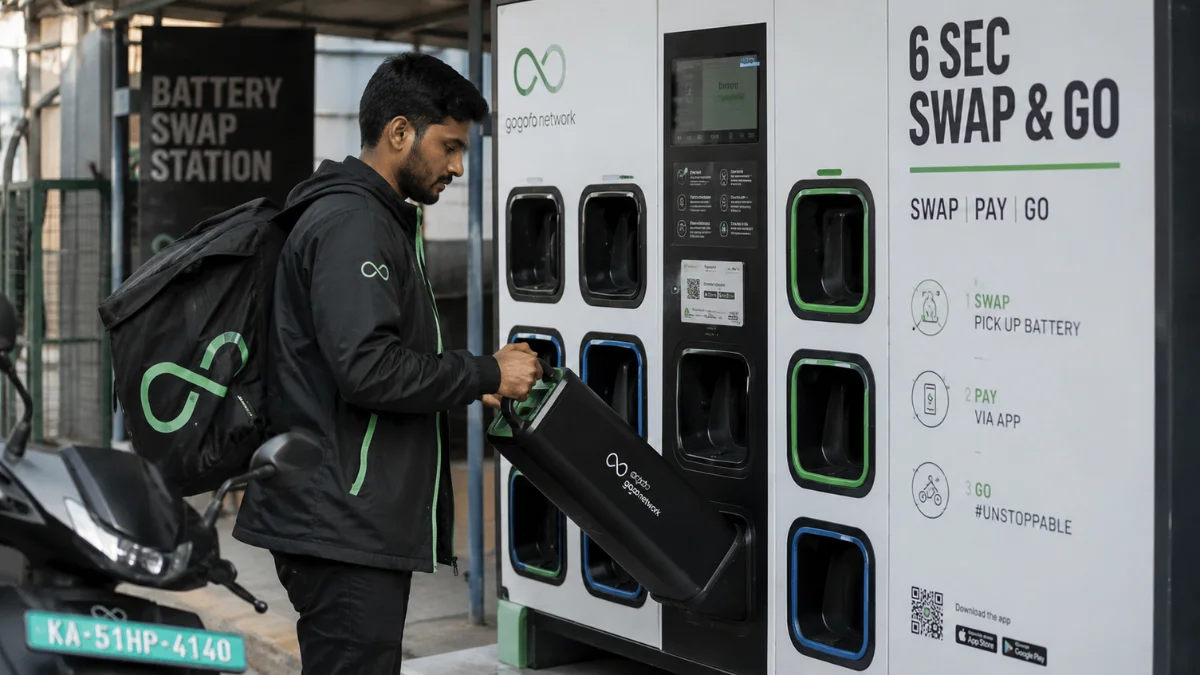
Yuma operates a battery-swap network for electric two- and three-wheelers aimed largely at gig-economy delivery riders, with more than 60 million lifetime swaps, roughly 100,000 batteries deployed, and over 400 stations across 18 cities. It works with more than ten vehicle makers, including Kinetic Green, Motovolt, BGauss and Quantum Energy. FY26 revenue reached close to ₹1 billion, and while the company is not yet profitable overall, it says some of its older stations are already EBITDA-positive and it is targeting EBITDA-positive economics within roughly two quarters.
So What
Global auto-parts suppliers rarely make repeated, deepening capital commitments to Indian EV-infrastructure ventures rather than one-time bets, which makes Magna's rising stake a more meaningful signal than the round size alone. Bringing Grinntech in-house shifts Yuma from operating a swap network toward controlling its own battery technology and manufacturing, reducing reliance on third-party cell and pack suppliers as the network scales.
"Battery swapping plays an important role in making electric mobility more accessible," said Matteo Del Sorbo, Yuma Energy board member and Group President at Magna.
What remains unclear is the new post-round ownership split between Magna and Yulu, and whether a rising Magna stake in a venture still built around Yulu's own vehicle fleet points toward closer integration or eventual full control. Neither company has said whether Yulu's board representation or operational role changes alongside the dilution, a detail that would matter more to Yulu's own strategy than to Yuma's swap network itself.
What to Watch
Watch whether Yuma reaches EBITDA-positive economics on the timeline it has stated, watch how the Grinntech acquisition affects battery cost and reliability as the network scales past 400 stations, and watch whether Magna's growing stake in Yuma foreshadows a larger move on Yulu's remaining share.
For more climate news click here