India's Cell Localization Mandate Gets a Concrete Odisha Test Case
India's rule requiring certified domestic solar cells is only as real as the manufacturers actually getting certified. This filing is one of the first concrete tests of that pipeline.
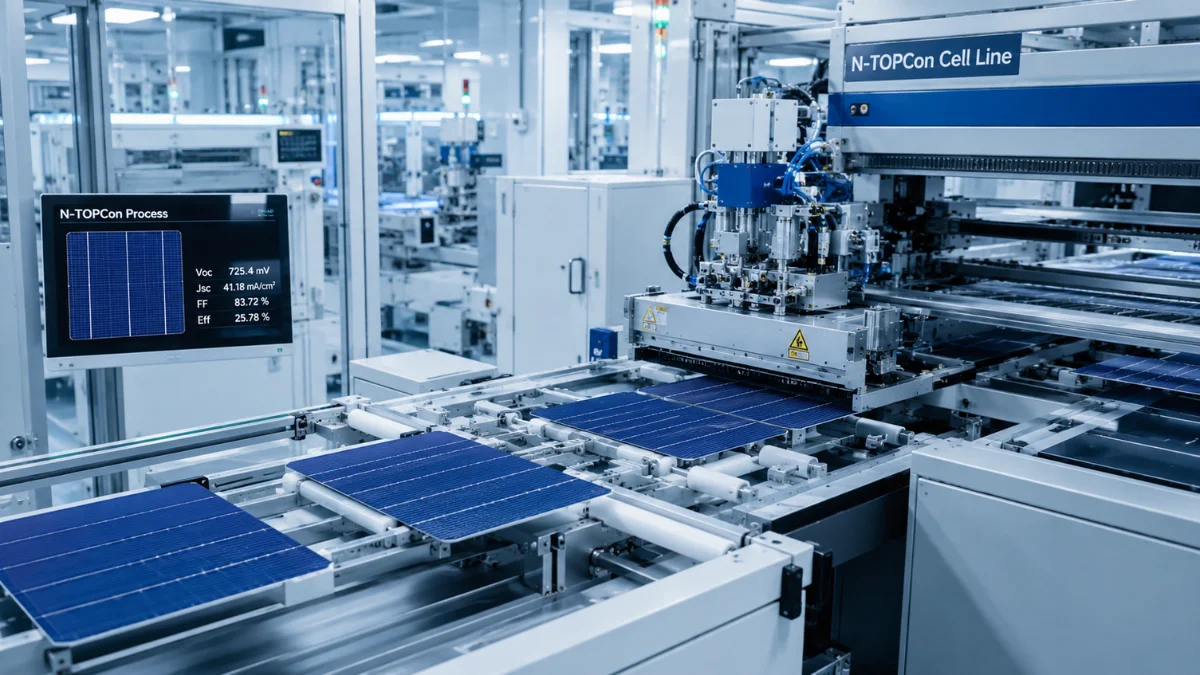
Saatvik Solar Industries has applied for ALMM List-II enlistment of a 2.4 GW monocrystalline bifacial N-TOPCon cell line, model SS-NTP-210R-16BB-BF, at its Gopalpur facility in Odisha's Ganjam district. The application, filed under the Domestic Content Requirement category, is a compliance step, not a capacity announcement, and it lands as India's ALMM List-II mandate for solar cells, in force since June 1, 2026, starts determining which manufacturers can actually supply DCR projects.
Where This Fits in the Build-Out
The 2.4 GW cell line is paired with 4 GW of module capacity at the same site and is described by the company as Phase I, nearing commissioning. Phase II would add another 3.6 GW of cell capacity, targeted for commercial production by FY2028, bringing the eventual Odisha total to 6 GW of cells alongside 4 GW of modules. Saatvik has an MoU with Odisha's Industrial Promotion and Investment Corporation for the site. Parent company Saatvik Green Energy separately operates 4.86 GW of module manufacturing capacity elsewhere in India.
The Actual Test
An ALMM-II inspection of the Phase I cell line is scheduled for September 2026. That inspection, not the capacity figures in the application, is what determines whether this line becomes certified DCR supply on the timeline the company is projecting. Manufacturing capacity announced in advance of certification is common in India's solar sector; whether it converts into ALMM-listed, deployable capacity on schedule is the harder number to track. ALMM List-II differs from the original ALMM list for modules in that it applies specifically to cells, closing a gap manufacturers had used to import cells while assembling modules domestically. A facility passing inspection on the timeline it has stated would be one of the earlier concrete data points on how quickly that gap is actually closing, rather than how large it was announced to be.
So What
For Saatvik, ALMM List-II certification would position it among a small group of manufacturers with certified domestic cell supply just as demand for DCR-compliant cells is set by policy to outstrip what's currently listed. For the sector, this filing is a more useful signal than the mandate itself: policy compliance dates only matter once specific facilities pass specific inspections, and this is one of the first visible instances of that process actually running. If certified capacity lags behind the pipeline of DCR-mandated projects needing it, the bottleneck shows up as project delays rather than a policy failure anyone announces directly.
"An important milestone in our ambition to build advanced and competitive solar manufacturing capabilities," said Prashant Mathur, CEO of Saatvik Green Energy.
What to Watch
Watch the outcome of the September ALMM-II inspection and whether the 2.4 GW line is listed without delay, watch whether Phase II's 3.6 GW addition stays on track for FY2028 commercial production, and watch whether other manufacturers disclose comparable ALMM-II filings, which would show whether certified domestic cell capacity is actually catching up to the mandate.
For more climate news click here