BlackRock's GIP Exits Indian Renewables, Inox Scales to 4 GW
A clean, fast exit from a mature renewable platform signals growing appetite among global infrastructure funds to monetise operating Indian clean-energy assets, even as fresh capital for new projects stays selective.
Global Infrastructure Partners, the BlackRock-owned fund, has sold its Indian renewable energy platform to Inox Clean Energy for ₹6,000 crore ($627.5 million), one of the fastest signing-to-close transactions reported in the sector this year.
The deal closed within roughly two months of signing, a pace Inox executives have called unusual for a transaction of this size. It lands as global infrastructure investors reassess their India renewable holdings: platforms built during the 2015 to 2020 capacity buildout are now mature enough to sell, and strategic buyers with balance sheet room are stepping in to consolidate them.
For GIP, the sale closes out a platform it built through Vena Energy's India unit. For Inox, backed by the INOXGFL Group, it is the company's largest inorganic move in its renewable build-out and pushes it from a mid-sized developer toward the top tier of Indian independent power producers.
Deal Adds 1 GW Operating, 4 GW of Storage-Backed Pipeline
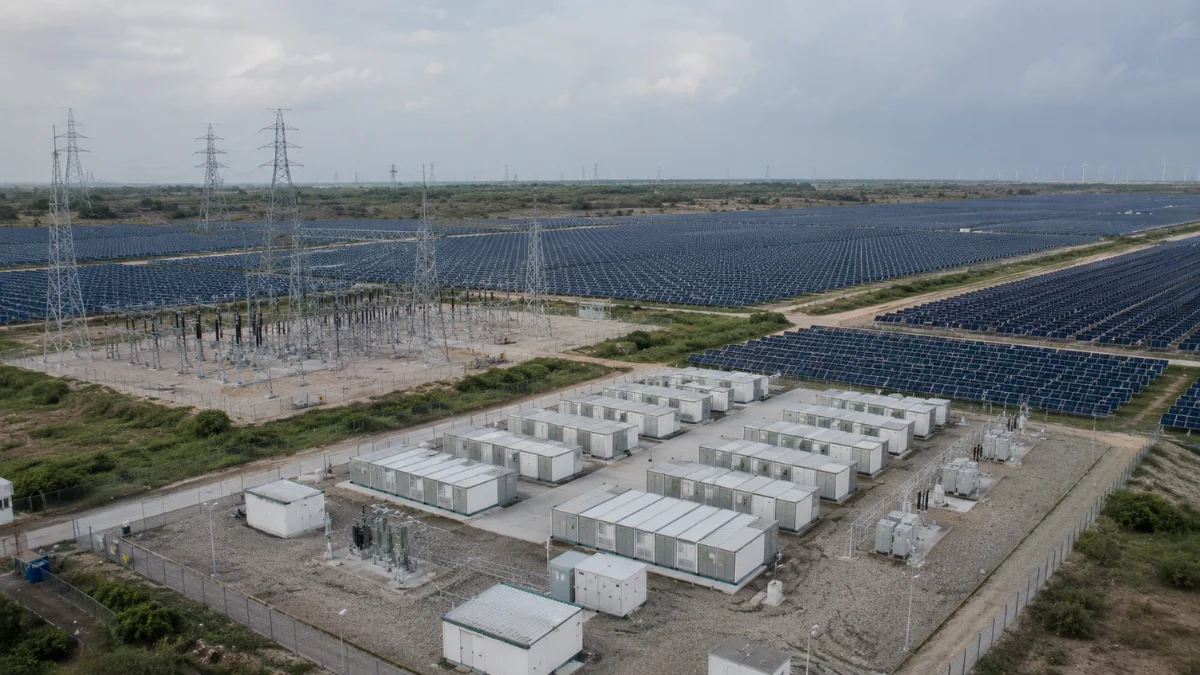
Vena Energy India brought roughly 1 GW of operational renewable capacity to the transaction. A further 1.7 GW of solar and wind sits at an advanced development stage, paired with 1.2 GWh of battery storage. Behind that sits an earlier-stage pipeline of 2.7 GW of solar and wind and 1.3 GWh of additional storage capacity.
Combined with its existing assets, Inox Clean Energy now holds close to 4 GW of operating and near-operational capacity, and a development pipeline exceeding 12 GW, with roughly 2.5 GWh of battery storage in progress. Vena Energy India's management team has transitioned to Inox to run the combined platform, a structure aimed at preserving project continuity rather than folding the assets into existing teams.
Inox financed the acquisition through internal equity and refinancing rather than fresh external capital, according to company statements. Reported closing dates vary slightly across trade press, August 18 to August 19, 2026, but all accounts agree the deal was signed in June and completed within two months.
Consolidation Pressure Builds as PE-Backed Platforms Reach Exit Age
The transaction extends a pattern visible elsewhere in Indian renewables this year. Capital that built greenfield platforms over the last decade is now exiting, and buyers with scale ambitions are absorbing that capacity rather than competing to build it from scratch. Tata Power's takeover of a Karnataka solar transmission SPV in early August and ReNew Energy's pending delisting both point the same direction, even though each deal has a different structure and different motivation.
For Inox, the acquisition is as much about proving execution capacity as adding megawatts. Akhil Jindal, Group CFO of INOXGFL Group, said the closing "is among the fastest closures for a transaction of this scale."
That speed matters in a sector where financing, regulatory clearance, and asset transfer routinely stretch deal timelines past a year. A repeatable fast-close capability gives Inox an edge in future auctions for distressed or exiting renewable platforms, and more of those are expected as early private equity investors approach the end of typical seven-to-ten-year fund cycles.
What to Watch
Whether GIP and other infrastructure funds active in India, including CDPQ and Actis, bring further mature platforms to market over the next 12 months. Whether Inox pursues additional consolidation or shifts toward organic build-out of the newly acquired pipeline. And whether this sub-two-month close becomes a template other strategic acquirers try to match, or remains specific to this transaction's financing structure.
ctive in this space, not something the three articles stated. Flag it if you want that line pulled or backed with a citation.
For more climate news click here