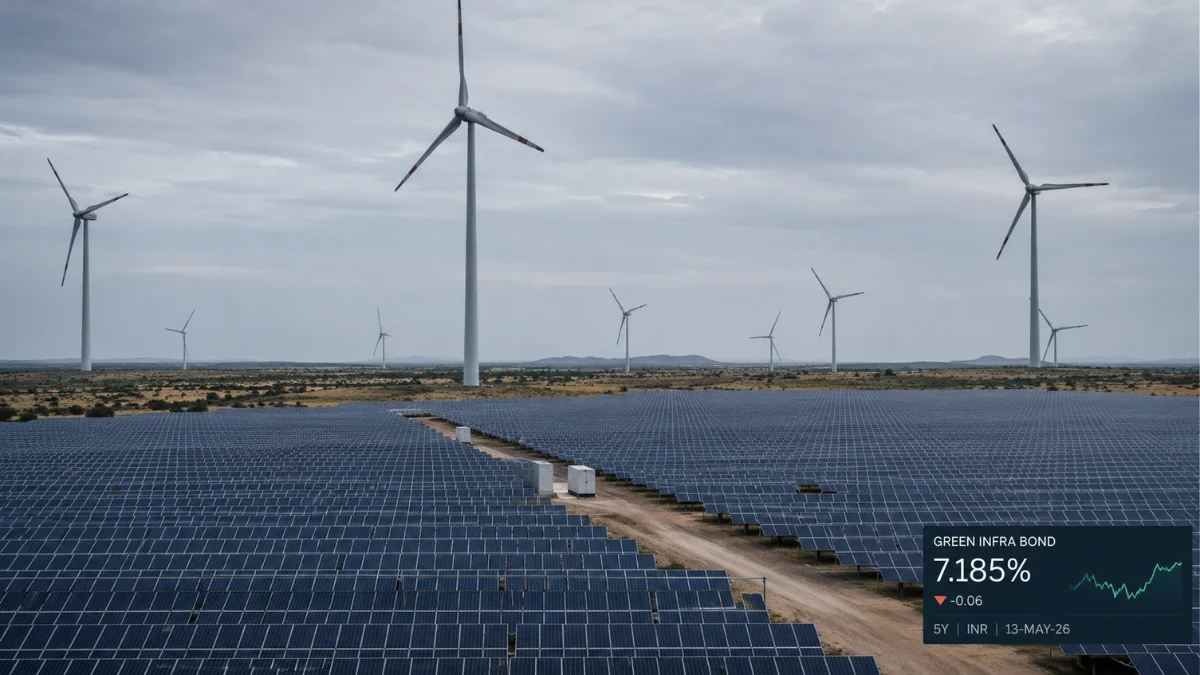
ReNew Energy's $7.02 Buyout Sets Up India's Largest Renewable Delisting
A consortium that shrank by half and a price that fell 14% from its 2025 peak show how much leverage shifted before ReNew Energy's board finally said yes.
ReNew Energy Global signed a binding agreement on August 11 to go private at $7.02 a share, cash paid by a buying group now reduced to Canada Pension Plan Investment Board and founder Sumant Sinha. The figure sits well below the $8.15 a share the same target commanded from a larger consortium just ten months earlier.
The deal reaches shareholders now because ReNew's Q1 FY27 results, published August 18 and 19, landed inside the execution window. The special committee has already endorsed the price on Rothschild & Co.'s fairness opinion, and the company still needs a 75% shareholder supermajority and antitrust clearances in India, Belgium and France before the scheme of arrangement closes. Every disclosure between now and that vote becomes evidence shareholders will use to judge whether $7.02 undervalues the business.
The price history matters more than usual here. Consortium buyouts rarely settle lower than an earlier failed bid unless something structural changed between rounds, and something did: the original four-party group lost its largest sovereign backer.
Masdar's December Exit Reset the Deal From Scratch
Talks began in December 2024 at $7.07 a share from a group of four: Masdar, CPP Investments, an ADIA-linked vehicle called Platinum Hawk, and Sinha. The offer rose through 2025, reaching a best-and-final $8.15 a share by October. Masdar withdrew from the consortium on December 15, 2025, without disclosing a reason, and the deal collapsed. Filings on the renegotiated proposal that followed, dated July 27 and August 6, 2026, name only CPP Investments and Sinha as the buying group. Masdar and the ADIA vehicle do not appear in the structure that became binding on August 11.
Minority Holders Get a Cash-or-Rollover Choice
Shareholders outside the consortium can take the $7.02 cash payout or elect to roll their stake into the private company. Anyone who does not make an election before the scheme's court hearing defaults to cash. The structure runs through a UK scheme of arrangement under the Companies Act 2006, which requires both a majority in number holding at least 75% of scheme shares at a court meeting and 75% of voting rights at a general meeting.
Q1 FY27 Numbers Give the Special Committee Its Latest Argument
ReNew reported revenue of ₹4,786 crore for the quarter, up 16.2% year on year, and net profit of ₹595 crore, up 16%, with commissioned capacity reaching roughly 13.5 GW. None of the figures change the offer price, but they arrive as the company's strongest available evidence that the business Sinha and CPP Investments are buying is growing faster than the fixed $7.02 valuation assumes.
A Cheaper Deal With Fewer Backers
The consortium that emerges from this restructuring is narrower and less internationally diversified than the one India's renewable sector watched form in 2024. Losing a UAE sovereign investor and a Gulf-linked fund from the buying group, while the price fell rather than rose, suggests either that Gulf capital's appetite for India renewable assets at this valuation cooled, or that the remaining two parties simply had more staying power in a drawn-out negotiation. Either reading matters for how other Indian power producers weighing similar structures price their own sovereign-wealth conversations.
It also revives a fight that never fully closed. Fund manager Redwheel publicly told the special committee in 2025 that even $7.07 a share understated ReNew's value, citing India's growth trajectory and the company's manufacturing upside. That objection targeted a higher price than the one now on the table. Whether Redwheel or other minority holders repeat that argument against $7.02 will shape how contested the 75% vote becomes.
What to Watch
Watch the shareholder vote itself: both the court meeting and general meeting thresholds require 75% approval, and at least one large holder has already argued a higher price than $7.02 undervalued the company. Watch the regulatory clearances still pending in India, Belgium and France, and the scheme's long stop date of March 31, 2027, or 95 days after the scheme circular publishes, whichever is later. And watch whether any of the original 2024 to 2025 consortium members, Masdar or the ADIA vehicle, resurface before the deal closes.
For more climate news click here