EKI Energy Posts Rs 15.80 Crore Loss, Down From Rs 0.72cr
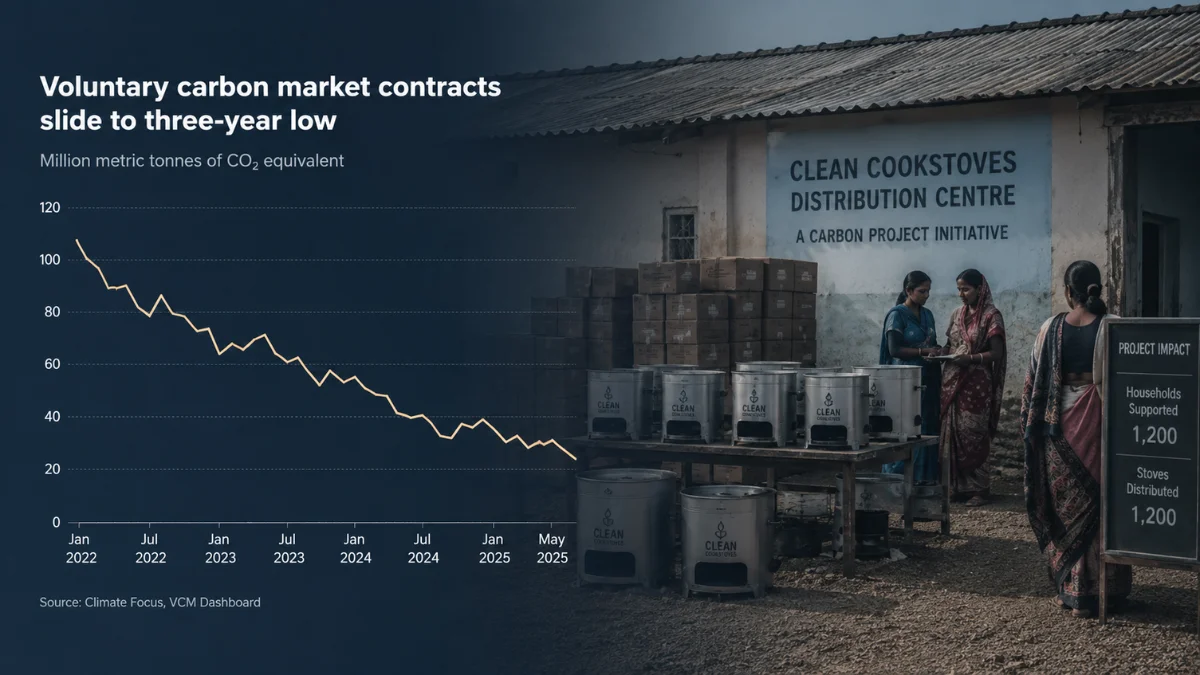
A widening loss at India's largest listed carbon-credit project developer is the clearest quantified read yet on how thin compliance and voluntary offset demand has become.
EKI Energy Services reported a consolidated net loss of Rs 15.80 crore for the quarter ended June 2026, more than twenty times the Rs 0.72 crore loss it posted in the same quarter a year earlier. Revenue from operations fell 29.99% year on year to Rs 10.46 crore, and dropped roughly 47% from the Rs 19.75 crore booked in the preceding quarter.
What EKI's Numbers Represent for the Market
EKI aggregates and monetises carbon credits from projects such as cookstoves, renewable energy and methane abatement, then sells them into voluntary and compliance buyers. That business model makes its revenue line an unusually direct proxy for real transaction volume in a market where headline project counts and registry listings often say little about actual demand. Global voluntary carbon markets have been under sustained pricing pressure since 2023 amid integrity scrutiny of credit quality, while India's own compliance mechanism, the Carbon Credit Trading Scheme, is still in its early obligation phase and has not yet generated meaningful trading volume for aggregators.
Losses Widened Beyond the Revenue Line
Operating margin turned sharply negative, at minus 135.85% against minus 25.37% a year earlier, meaning operating costs now run well over double revenue. Loss before tax reached Rs 17.10 crore on a standalone basis, against Rs 2.33 crore a year earlier, and standalone basic and diluted earnings per share came in at minus Rs 5.53.
Governance Turnover Lands in the Same Quarter
The earnings collapse coincided with three separate governance events. EKI's internal auditor, M/s Agarwal & Dhoot, resigned effective May 5. The Registrar of Companies in Gwalior imposed a Rs 15.64 lakh penalty on the company in June. And EKI appointed Pooja Jorway as chief financial officer on July 15, roughly a month before these results were filed. The company has not publicly linked the three events to its financial position.
So What
For anyone tracking India's compliance and voluntary carbon markets, EKI's numbers are one of the only market-priced, quarterly-disclosed signals available, and they point to real transaction volume drying up faster than registry-listed project counts would suggest. That has direct implications for other Indian carbon-project developers and aggregators carrying similar revenue concentration in voluntary credits: if EKI, as the largest listed player, is seeing this scale of contraction, smaller unlisted developers are likely exposed to the same demand collapse without EKI's balance sheet to absorb it.
The open question is whether the governance turnover is coincidental timing or tied to the deteriorating numbers. A new CFO taking over immediately after an auditor resignation and a regulatory penalty, in the same quarter losses widened twenty-fold, is a pattern worth watching rather than dismissing as routine.
What to Watch
Watch Q2FY27 results for whether the loss stabilises or continues widening, and whether CCTS compliance obligations, which are still phasing in for covered sectors, begin generating trading volume for aggregators like EKI later in FY27.
For more climate news click here