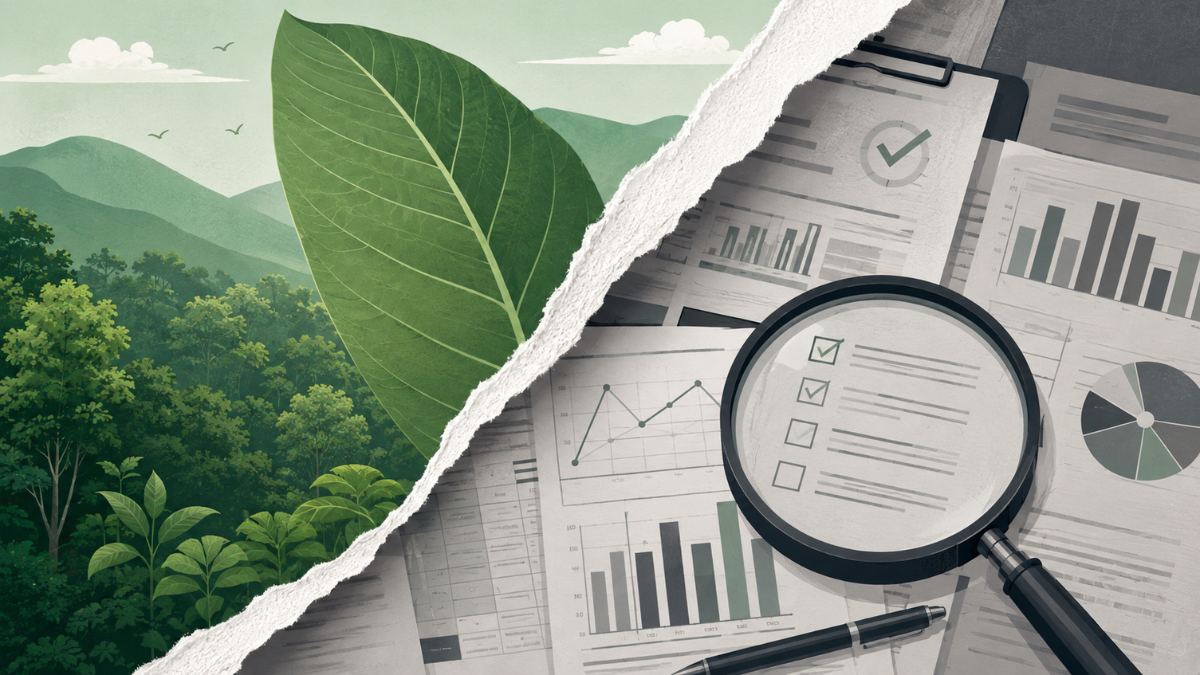
A green label. A picture of a forest. A promise to become net zero. A product described as “eco-friendly”. A claim that your packaging is recyclable.
In today’s sustainability-conscious marketplace, these messages can be powerful.
They can also be dangerous. As consumers, investors, regulators and supply-chain partners increasingly expect businesses to demonstrate environmental responsibility, companies are under growing pressure to communicate their sustainability credentials.
But there is a critical distinction between doing good and looking good.
When environmental claims exaggerate, obscure, selectively present or simply misrepresent actual environmental performance, the result is greenwashing.
And greenwashing is no longer just a reputational concern.
It can expose businesses to regulatory action, advertising complaints, litigation, investor scrutiny, consumer backlash and loss of trust.
The issue is becoming increasingly important in India as well. The Advertising Standards Council of India (ASCI) introduced its Guidelines for Advertisements Making Environmental/Green Claims in 2024. The guidelines require environmental claims to be specific, substantiated and verifiable, and address claims ranging from “eco-friendly” and “sustainable” to “carbon neutral”, “net-zero”, “recyclable” and “plastic-free”. (ASCIONLINE)
Globally, regulators are moving in the same direction.
The European Commission, for example, has highlighted the problem of vague and unsupported environmental claims and is developing stronger requirements for companies making voluntary green claims. (Environment)
The message for businesses is clear:
If you cannot measure it, substantiate it and explain it, don’t market it as a sustainability achievement.
So how can organisations avoid greenwashing?
Here are five practical ways, illustrated through some of the world’s most prominent greenwashing controversies.
First, What Exactly Is Greenwashing?
Greenwashing is the practice of creating a misleading impression that a product, service, organisation or business activity is more environmentally beneficial than it actually is.
It doesn’t always involve an outright lie.
Sometimes it is much more subtle.
Greenwashing can happen when a company:
- Makes a vague environmental claim
- Highlights a small improvement while hiding a larger environmental impact
- Uses impressive sustainability imagery without meaningful evidence
- Presents future ambitions as if they are current achievements
- Uses offsets to imply that emissions have disappeared
- Makes a claim about a product when the benefit applies only to its packaging
- Uses an apparently independent sustainability label that has little credible verification behind it
- Selectively reports favourable environmental data
The common thread is a gap between perception and reality.
And that gap is becoming increasingly difficult for businesses to hide.
1. Replace Vague Green Claims With Specific, Measurable Claims
One of the easiest ways to fall into greenwashing is to use words that sound impressive but say very little.
Consider:
“Eco-friendly.”
“Green.”
“Planet positive.”
“Sustainable.”
“Clean.”
“Good for the planet.”
The problem is not necessarily that these words are always false.
The problem is that they are too broad.
What exactly makes the product sustainable?
Does “eco-friendly” refer to the raw material, manufacturing process, packaging, energy consumption, recyclability or entire lifecycle?
The Advertising Standards Council of India specifically cautions against generic environmental claims without adequate qualifiers and substantiation. It also requires environmental claims to be supported by accessible, verifiable evidence. (ASCIONLINE)
The U.S. Federal Trade Commission’s Green Guides similarly warn against broad, unqualified claims such as “green” or “eco-friendly”, because they can communicate a much wider environmental benefit than a company can actually substantiate. (Federal Trade Commission)
What businesses should do instead
Replace:
“Our packaging is eco-friendly.”
with something like:
“This package contains 70% post-consumer recycled paper by weight and is recyclable in facilities that accept paperboard.”
The second statement is less glamorous.
But it is much more useful.
It tells the consumer:
- What has changed
- By how much
- Where the benefit applies
- What limitation exists
That is credible sustainability communication.
The rule
Be specific enough that someone else can independently verify your claim.
If your sustainability claim cannot survive the question “Compared with what, measured how, over what period and verified by whom?”, it probably needs work.
2. Measure the Full Impact—Not Just the Most Convenient Part
One of the most common forms of greenwashing is cherry-picking.
A company finds one environmental attribute that looks good and makes it the centre of its sustainability story, while ignoring the rest of its impact.
This can create a misleading overall impression.
Imagine a company saying:
“Our bottle is made from 50% recycled plastic.”
That may be completely accurate.
But what happens if the same company uses significantly more plastic overall than before?
Or if the product’s manufacturing process is highly emissions-intensive?
Or if the packaging is technically recyclable but there is little infrastructure available to recycle it?
The claim may be factually correct while the overall impression is misleading.
The FTC’s guidance specifically warns that marketers should consider trade-offs rather than highlight one environmental benefit when other aspects undermine the overall environmental claim. (Federal Trade Commission)
The European Commission has identified a similar problem: environmental claims can mislead when a company makes a claim about the entire product even though the benefit applies only to one particular aspect. (Representation in Malta)
The lesson from HSBC
A particularly instructive example comes from banking.
In 2022, the UK’s Advertising Standards Authority upheld complaints against two HSBC advertisements.
One advertisement highlighted HSBC’s plan to provide up to $1 trillion in financing and investment to help clients transition to net zero.
Another promoted HSBC’s role in planting two million trees in the UK.
The ASA concluded that the advertisements omitted significant information about HSBC’s own contribution to greenhouse-gas emissions through its financing and investments, and therefore gave consumers a misleading impression. (ASA)
The important lesson isn’t that financing transition or planting trees is inherently problematic.
It is that a sustainability communication cannot spotlight a positive contribution while leaving out material information that changes how the overall environmental impact should be understood.
What businesses should do
Before publishing a sustainability claim, ask:
What is the full system impact?
Consider:
- Raw materials
- Manufacturing
- Energy
- Transport
- Packaging
- Product use
- End-of-life
- Supply chain
- Scope 1 emissions
- Scope 2 emissions
- Relevant Scope 3 emissions
A lifecycle perspective makes greenwashing much harder.
3. Never Use Carbon Offsets as a Shortcut to Real Emissions Reduction
“Carbon neutral” has become one of the most powerful—and controversial—claims in sustainability marketing.
The basic problem is simple.
There is a huge difference between:
reducing emissions
and
paying someone else to compensate for emissions.
Offsets can play a role in climate strategies, but they should not become a substitute for reducing emissions within a company’s own operations and value chain.
This distinction has become particularly important in aviation.
The airline industry example
In 2024, the European Commission and national consumer protection authorities took action against 20 airlines over potentially misleading environmental claims. Among the concerns were claims suggesting that flight emissions could be offset through climate projects or sustainable aviation fuels, including through additional payments by consumers. (European Commission)
The issue is straightforward:
A passenger cannot necessarily conclude that the emissions produced by their specific flight have been eliminated simply because money has been directed towards a climate project.
The ASA reached a similar conclusion in its 2023 ruling against Air France.
An advertisement promoted travel as allowing consumers to “travel better and sustainably”. The ASA found that consumers could understand the claim as meaning that flying with Air France was a sustainable form of travel. Because the airline could not substantiate that broad environmental impression, the ad was ruled misleading. (ASA)
What businesses should do
If offsets are part of your climate strategy:
- Measure your actual emissions first.
- Reduce emissions wherever technically and economically feasible.
- Explain the residual emissions separately.
- Disclose the nature and quality of any offsets used.
- Avoid suggesting that purchasing an offset makes the underlying activity emission-free.
- Distinguish between emissions reduction and compensation.
The safer communication is:
“We reduced our Scope 1 and 2 emissions by 28% from our 2022 baseline and purchased verified credits to address specified residual emissions.”
rather than:
“We are a carbon-neutral company.”
The first statement tells the story.
The second can hide it.
4. Make Sure Your Sustainability Claims Match What You Actually Do
Perhaps the most famous environmental marketing controversy in modern corporate history is Volkswagen’s “Clean Diesel” scandal.
It offers one of the clearest lessons in the dangers of sustainability claims that are disconnected from operational reality.
Volkswagen marketed certain diesel vehicles as “clean diesel” and promoted them as low-emission and environmentally friendly.
According to the U.S. Federal Trade Commission, the vehicles had been equipped with illegal software designed to detect emissions testing and alter the vehicle’s emissions controls during the test. The FTC alleged that Volkswagen’s campaign falsely represented the vehicles as low-emission and environmentally friendly. (Federal Trade Commission)
The resulting consequences were enormous.
In 2016, Volkswagen agreed to settlements involving up to $14.7 billion for the affected 2.0-litre diesel vehicles in the United States, including consumer compensation and environmental mitigation. (Federal Trade Commission)
The lesson extends far beyond automobiles.
Don’t market the aspiration as the achievement.
A company might say:
“We are becoming net zero.”
That is different from:
“We are net zero.”
A company might say:
“We have committed to reducing emissions 50% by 2030.”
That is different from:
“We have reduced emissions 50%.”
A company might say:
“We are developing a recyclable packaging solution.”
That is different from:
“Our packaging is recyclable.”
These distinctions matter.
Build a claim hierarchy
A useful approach is to distinguish between:
What we have achieved
What we are currently doing
What we have committed to do
What we hope to achieve
These should never be presented as interchangeable.
And future sustainability claims should have credible plans behind them. ASCI’s guidelines specifically state that aspirational environmental claims should not be made without clear and actionable plans for achieving them. (ASCIONLINE)
5. Build an Evidence Trail Behind Every Sustainability Claim
The fifth—and perhaps most important—way to avoid greenwashing is to make sustainability claims auditable.
A marketing team should never be the only team that knows why a sustainability claim is being made.
Behind every significant claim should be a trail of evidence.
For example:
“Our carbon emissions fell by 32%.”
Should immediately lead to:
- What was the baseline year?
- What emissions were included?
- Which scopes?
- What organisational boundary?
- What methodology?
- What activity data?
- What emission factors?
- What changed operationally?
- Was the reduction absolute or intensity-based?
- Was the calculation independently verified?
This is where sustainability moves from marketing to management.
The DWS example
The financial sector provides an important example.
In 2023, the U.S. Securities and Exchange Commission found that DWS Investment Management Americas had made material misstatements and failed to implement policies and procedures reasonably designed to prevent violations relating to its integration of ESG factors in certain investment products. The SEC order noted that DWS had marketed itself as a leader in ESG while not adequately implementing aspects of its stated ESG integration policy. (SEC)
The lesson is particularly relevant for companies producing ESG reports and sustainability communications:
Your public sustainability narrative must match your internal systems.
If your website says ESG is embedded across the business, there should be:
- Policies
- Responsibilities
- Data
- Controls
- Training
- Monitoring
- Governance
- Evidence
to demonstrate that it actually is.
The Five-Part Anti-Greenwashing Framework
The examples above point towards a simple framework that businesses can adopt.
1. Define
What exactly are you claiming?
Avoid vague language.
2. Measure
What data supports the claim?
Establish a clear baseline, boundary and methodology.
3. Substantiate
Can the claim be independently verified?
Use credible scientific evidence, recognised methodologies and, where appropriate, independent assurance or certification.
4. Disclose
What important limitations or contextual information does the consumer, investor or stakeholder need to know?
Don’t hide inconvenient information in fine print.
5. Monitor
Does the claim remain accurate?
Sustainability performance changes.
A claim that was accurate in 2024 may not remain accurate in 2027.
Green claims should therefore be periodically reviewed just like financial, legal and product claims.
What Greenwashing Looks Like in Practice
Here is a simple way to identify common warning signs:
Greenwashing Risk What It Looks Like Better Approach
Vague claims “Eco-friendly product” State the specific environmental benefit
Cherry-picking Highlighting one improvement while hiding larger impacts Provide material lifecycle context
Offset substitution “Carbon neutral” based mainly on offsets Prioritise actual emissions reduction
Future-washing “We will be net zero” without a credible roadmap Publish targets, milestones and actions
Certification washing Unclear or self-created green labels Use credible, transparent certification
Selective data Reporting only favourable metrics Explain methodology and limitations
Scope confusion Scope 1/2 progress presented as total emissions reduction Clearly disclose boundaries and Scope 3
Packaging washing Recyclable packaging presented as a fully sustainable product Distinguish packaging benefit from product footprint
Greenwashing Is Not Just a Marketing Problem
It is tempting to leave greenwashing to the marketing and communications department.
That is a mistake.
A credible sustainability claim is the outcome of multiple functions working together.
Sustainability teams
Measure impact and define the methodology.
Operations
Implement actual environmental improvements.
Finance
Track investment, costs and financial implications.
Procurement
Manage supply-chain sustainability.
Legal
Review regulatory and disclosure risks.
Marketing
Translate verified performance into understandable communication.
Leadership
Ensure that sustainability commitments are connected to business strategy.
This makes ESG governance essential.
A company should be able to answer a simple question:
“Who owns this claim?”
If the answer is “marketing”, you may have a problem.
The Role of Data in Ending Greenwashing
The best defence against greenwashing is not better communication.
It is better data.
Companies need reliable information about:
- Energy consumption
- Greenhouse-gas emissions
- Water consumption
- Waste generation
- Materials
- Supply chains
- Packaging
- Product lifecycle
- Social impacts
- Governance performance
This is why capabilities such as GHG Accounting, ESG Reporting, lifecycle assessment and sustainability data management are becoming increasingly important.
A company that doesn’t know its footprint cannot credibly communicate how it is reducing it.
And a company that cannot substantiate its sustainability claims is increasingly exposed as regulators, consumers and investors become more sophisticated.
India: Why Greenwashing Matters Now
India’s sustainability landscape is evolving rapidly.
Businesses increasingly face expectations around ESG disclosure, responsible supply chains, climate risk, carbon emissions and environmental performance.
At the same time, India’s advertising ecosystem is becoming more conscious of environmental claims.
ASCI’s greenwashing guidelines require environmental claims to be reliable, verifiable and transparent. They also address comparative claims, certifications, future promises, carbon offsets and claims such as “compostable”, “biodegradable”, “recyclable”, “plastic-free”, “carbon neutral” and “net-zero”. (ASCIONLINE)
This means Indian businesses need to think beyond simply asking:
“Is this claim technically true?”
They also need to ask:
“What impression will this claim create?”
That distinction is crucial.
A statement can be technically accurate while still creating a misleading impression if important context is omitted.
From Greenwashing to Greenhushing?
There is another danger.
As companies become more concerned about greenwashing, some may choose to say almost nothing about sustainability.
This is sometimes referred to as greenhushing.
That isn’t the solution either.
Businesses should be able to communicate genuine progress.
The answer isn’t silence.
The answer is credible transparency.
Tell stakeholders:
- What you have achieved
- What you haven’t achieved
- Where you are improving
- Where you still have problems
- What your targets are
- How you are measuring progress
In fact, acknowledging shortcomings can make sustainability communication more credible.
A company saying:
“Our Scope 3 emissions remain our biggest challenge, accounting for 72% of our measured footprint. We have begun supplier engagement and have set a 2030 reduction target.”
may actually inspire more confidence than a company covered in green leaves claiming to be “planet positive”.
The Golden Rule: Don’t Let the Story Run Ahead of the Data
Greenwashing ultimately happens when communication moves faster than transformation.
A company discovers that sustainability sells.
The marketing campaign gets launched.
The website turns green.
The report gets published.
But the underlying business hasn’t changed enough.
The better sequence is:
Measure → Understand → Improve → Verify → Communicate.
Not:
Communicate → Promote → Defend → Explain.
This is the fundamental shift businesses need to make.
Sustainability Should Be Proven, Not Performed
Greenwashing is not simply about misleading consumers.
It undermines the credibility of the entire sustainability movement.
When one company exaggerates its environmental credentials, it makes consumers suspicious of everyone.
It disadvantages businesses that are genuinely investing in sustainability.
And ultimately, it delays meaningful climate action.
The solution is surprisingly simple:
Don’t make sustainability claims bigger than your sustainability performance.
Measure your impact.
Set credible targets.
Reduce actual emissions.
Understand your supply chain.
Use evidence.
Disclose limitations.
Get independent verification where appropriate.
And communicate only what you can substantiate.
The future of sustainability communication will belong not to the companies with the greenest advertising, but to those with the strongest evidence behind their claims.
Because in a world increasingly demanding accountability, the most powerful sustainability statement is not:
“We are green.”
It is:
“Here is our data. Here is what we have changed. Here is what still needs to change.”
Frequently Asked Questions
What is greenwashing?
Greenwashing is the use of false, misleading, vague or unsubstantiated environmental claims that create an impression that a product, service or organisation is more environmentally responsible than it actually is.
What is the most common form of greenwashing?
Vague claims such as “eco-friendly”, “green”, “sustainable” or “planet-friendly” are common examples, particularly when they are not accompanied by specific, verifiable evidence.
Is carbon offsetting greenwashing?
Not necessarily. Carbon offsets can be part of a climate strategy, but presenting a company or product as having eliminated its emissions simply because offsets were purchased can be misleading. Companies should prioritise actual emissions reductions and clearly disclose the role of offsets.
Can a company be accused of greenwashing if its claim is technically true?
Yes. Environmental communication can be misleading not only because of false statements but also because of omissions, lack of context or claims that create an exaggerated overall impression. This is why regulators increasingly focus on how reasonable consumers are likely to understand environmental claims.
How can Indian companies avoid greenwashing?
Indian companies should ensure that environmental claims are specific, evidence-based, accessible and verifiable. They should also clearly disclose material information and distinguish between current achievements, commitments and future aspirations, consistent with applicable requirements and ASCI’s green-claims guidance. (ASCIONLINE)
Why is ESG data important for avoiding greenwashing?
Reliable ESG data provides the evidence needed to substantiate sustainability claims. Without accurate information on emissions, energy, water, waste, supply chains and other material impacts, businesses risk communicating sustainability performance that cannot be independently demonstrated.
About Climatora
At Climatora, we believe sustainability should be measured before it is marketed.
Our work in GHG Accounting, ESG Reporting, sustainability education and ESG readiness helps organisations build the capabilities needed to understand their environmental impact, improve performance and communicate sustainability with greater credibility.
Because genuine sustainability isn’t about looking green.
It’s about being able to prove it.
For more such blogs click here