Foreign Equity Funds India's Renewable Developers While Domestic Insurers Stay Out
India's renewable build-out runs on foreign growth equity. A new IEEFA proposal to bring domestic insurers in at the construction stage depends on a SEBI reform that has not yet cleared the regulator's board.
Life insurers manage about ₹68 lakh crore in India, yet almost none of it reaches renewable energy developers before their projects start generating. A briefing note published on 19 November by the Institute for Energy Economics and Financial Analysis (IEEFA) sets out a two-stage route to change that, and the second stage rests on rules SEBI is still weighing.
Domestic Money Arrives Only After the Risk Has Gone
IEEFA's central finding is a sequencing problem. Growth equity for unlisted Indian renewable companies has come almost entirely from foreign investors. Domestic institutional investors lend to the sector and buy listed shares and operating assets, but they rarely take equity in projects still being built.
The size of the idle pool is the argument. The note puts life insurers' assets at ₹68 lakh crore as of March 2025; a 1% allocation would equal about ₹68,000 crore. The Employees' Provident Fund Organisation (EPFO) held a further ₹28 lakh crore but can invest only in trusts sponsored by public sector undertakings, which excludes most renewable vehicles.
For scale, Climate Watch reported on 6 November that inflows since RE-Invest 2024 total about ₹6 lakh crore. A 1% insurer allocation would add more than a tenth of that.
The Two Phases
Phase one uses infrastructure investment trusts (InvITs). Developers sell operating assets into trusts held by insurers and pension funds, then recycle the proceeds into new capacity. This route already exists and needs no rule change.
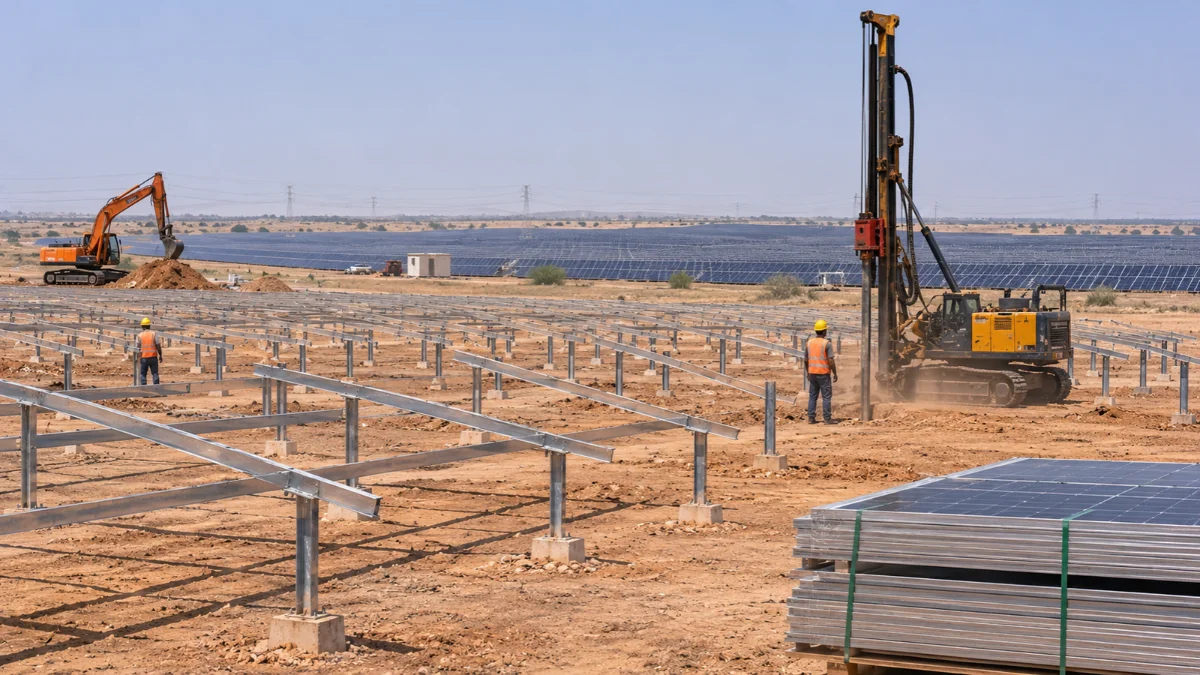
Phase two is the departure. Once an InvIT has scale and a credit record, it would take limited exposure to under-construction projects through a separate platform, with developers co-investing and retaining execution risk. A transitional first-loss buffer from a public institution or multilateral lender would absorb early construction losses. IEEFA names the National Bank for Financing Infrastructure and Development (NaBFID) as a candidate provider, which would need a new mandate.
The Regulatory Gap Sits at SEBI
Phase two requires InvITs to hold minority stakes in third-party projects under construction. SEBI proposed exactly that in a 6 August consultation paper. When its board took up the other proposals from that paper, the memo covered unitholder approvals, sponsor exit offers and remote infrastructure, and left the third-party item out.
SEBI has not abandoned the idea. Executive Director Maninder Cheema said on 22 October that the regulator was still exploring it, and called domestic insurance and pension participation a key priority. Any approval would also sit within the existing cap, which limits InvITs to 10% of asset value in under-construction projects.
That ceiling defines the opportunity. Phase two would open a narrow channel for domestic capital, not a flood, and its value depends on how many renewable InvITs reach the scale IEEFA's design requires.
Who Gains and Who Waits
Developers stand to gain a cheaper, rupee-denominated source of construction equity and less exposure to foreign capital that can leave quickly. Insurers gain long-duration assets matched to their liabilities, but only if instruments fit their regulators' risk limits. IEEFA's lead author, Shantanu Srivastava, said mobilisation would "depend on investment structures meeting insurers' regulatory requirements and risk limits."
What to Watch
The first signal is whether SEBI brings the third-party under-construction proposal to a board meeting, and whether it lifts or keeps the 10% cap. The second is the Finance Ministry's position on giving NaBFID a first-loss mandate, which IEEFA treats as a precondition. The third is whether the insurance and pension regulators adjust their investment rules, particularly EPFO's restriction to public sector trusts.
For more climate news click here