Savarghar Excavation Claims Widen Scrutiny of Adani's 1,500 MW Tarali Project
India needs pumped storage to firm its solar build-out, and a 1,500 MW project in Satara is now testing how far a developer can move ahead of its clearances.
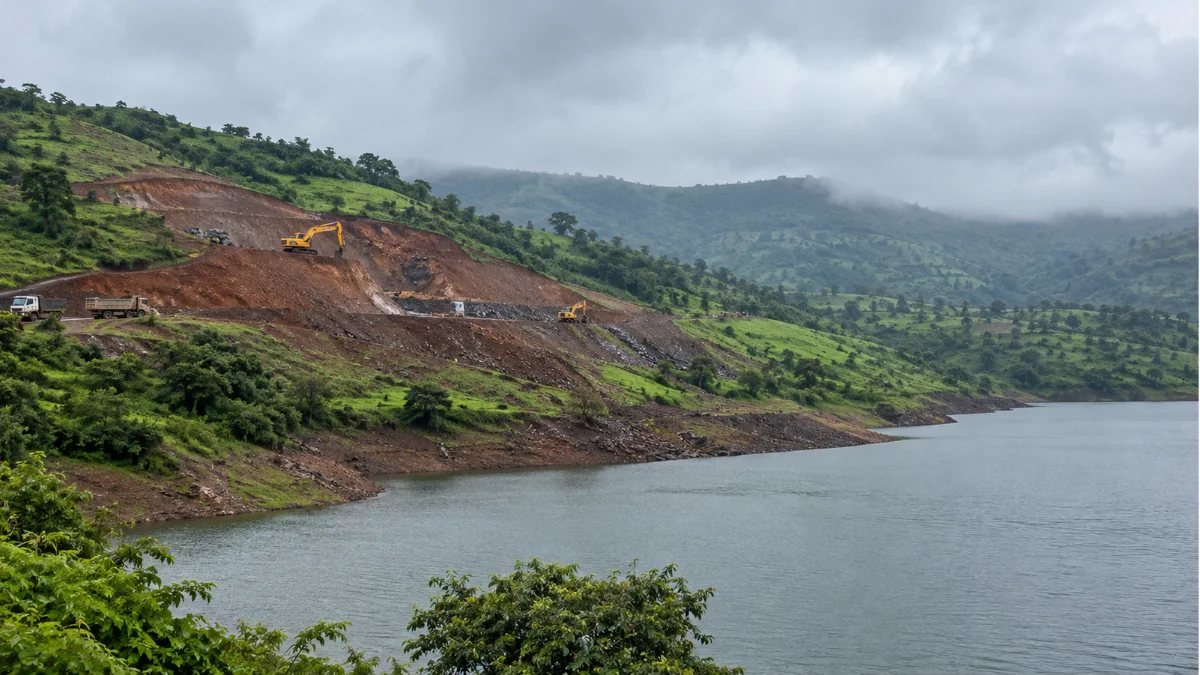
Two Maharashtra regulators have now moved against Adani Green Energy's 1,500 MW Tarali pumped storage project in Satara district in under ten days. The Maharashtra Pollution Control Board (MPCB) has directed the project entity, Adani Renewable Energy One, to stop excavation and construction at Savarghar village, The Times of India reported on 22 November, following a forest department halt on 13 November.
A Sequence of Interventions
The scrutiny began in Delhi. On 6 November, the Union Environment Ministry asked the state forest department to investigate the project on priority. A week later, the Patan forest range issued a stop-work notice citing the absence of prior approval from the National Board for Wildlife (NBWL), giving the company three days to respond.
The MPCB order turns on location rather than wildlife. Tarali's environmental clearance, granted in February 2025, covers 150.74 hectares across Nivade, Tondoshi, Kalambe and Jalu villages in Patan taluka. Savarghar is not among them. An honorary wildlife warden, Rohan Bhatte, had written to the MPCB member secretary seeking an independent inquiry into excavation there. The full text and legal basis of the MPCB direction were not available at the time of writing.
Adani Disputes Every Charge
Adani Green says construction began only after statutory approvals were in place: environmental clearance in February 2025 and the MPCB's own Consent to Establish on 7 April 2025. Its wildlife clearance proposal is pending before the NBWL. In a 16 November statement, the company said "no component of the Tarali Pumped Storage Project falls within any notified Protected Area" and that no forest land is involved.
The company has also contested reporting that it revised the project's cost from ₹5,675 crore to ₹56.75 crore in a September 2026 submission. It says the lower figure covered only preliminary surveys and site investigations. The distinction matters because conservation contributions are linked to project value, and Forest Minister Ganesh Naik reportedly pressed the company on those obligations when he met its officials on 17 November.
Why the Second Order Matters More Than the First
The forest department halt was procedural and may be short-lived; reports after the Naik meeting suggested it could be withdrawn. A pollution board order tied to work outside the cleared footprint is harder to resolve with paperwork. If excavation at Savarghar is found to fall outside the clearance, the remedy could require an amended clearance, which reopens appraisal by the Environment Ministry's expert committee.
That committee has already shown it will push back on Adani's Maharashtra pumped storage plans. It earlier declined clearance for the company's 1,500 MW Warasgaon Warangi project in the Western Ghats, asking for a redesigned proposal with lower environmental impact.
The wider exposure is to India's storage pipeline. Pumped storage is the main long-duration complement to solar that India is building at gigawatt scale, and the Western Ghats host many of the best sites. Each dispute over how clearances are scoped raises the regulatory risk premium for developers and financiers lining up behind the same terrain.
What to Watch
Three decisions will set Tarali's timeline. The first is whether the forest department withdraws its notice after reviewing Adani's response. The second is the MPCB's finding on Savarghar, and whether it treats the work as a breach of the Consent to Establish or a matter for an amended clearance. The third is the NBWL's ruling on the pending wildlife proposal, which neither regulator's order resolves. A ruling against the company on any of the three would push back the project's commissioning schedule.
For more climate news click here