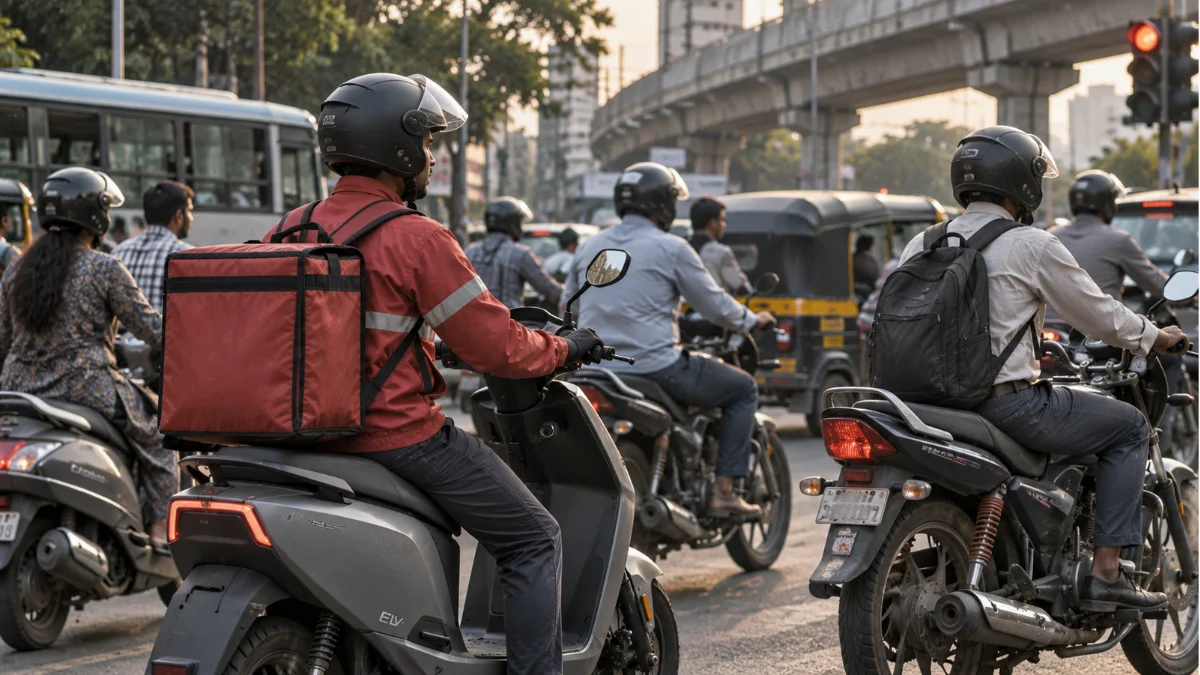
Gig Economy Limits Show as Eternal Reworks EV Fleet Target
India’s largest delivery platform has conceded that its 2030 electric fleet pledge cannot survive its own growth, exposing the weak point in gig-economy climate targets: the company does not own the vehicles.
Eternal, the parent of Zomato and Blinkit, has stepped back from its target of a fully electric delivery fleet by 2030. Its chief sustainability officer, Anjalli Ravi Kumar, told PTI in an interview published on 15 November that the deadline is no longer achievable and that a revised group-wide date is being worked out.
A Pledge Outgrown by the Business
Zomato joined the Climate Group’s EV100 initiative in June 2021, committing to 100% electric deliveries by 2030, and later added a goal of net zero across its food delivery value chain by 2033. Eternal’s website still lists both targets.
The arithmetic changed underneath them. When the pledge was set, Zomato had about 1.5 lakh monthly active riders. Zomato and Blinkit together now have about 12 lakh, an eightfold increase. Kumar said the earlier deadline “doesn’t look feasible” given that growth.
Churn compounds the problem. To keep 12 lakh riders active each month, Eternal says it must onboard about 30 lakh people a year across roughly 900 cities. Kumar said she could not guarantee reliable EV access for all of them, and did not know when she could.
Progress Real, but Far From the Target
Adoption has risen. Eternal reported more than 100,000 EV-based delivery partners by March 2026, roughly double a year earlier. Electric vehicles handled 132.3 million food deliveries in FY26, about 13.5% of the total, according to reported company data. Kumar put fleet EV share at 12% to 13% as of last December, against market penetration of 6% to 7%.
That is roughly twice the national rate, and still about seven-eighths short of the pledge with four years left.
The scope is also widening. Kumar said any new target must cover the whole group, including Hyperpure’s trucks and small commercial vehicles, not only two-wheelers. A broader target is harder to hit, which helps explain why Eternal is reluctant to name a date. On whether 2035 is possible, she said that would depend partly on how far state EV policies have rolled out.
Why Fleet Pledges Hit a Wall in the Gig Model
The structural issue is ownership. Eternal’s delivery partners are independent workers who supply their own vehicles, and its sustainability disclosures classify them as value chain partners rather than workforce. The company can incentivise and offer rentals, and it pays EV riders the same as petrol riders despite lower running costs. It cannot mandate a switch without shrinking its labour pool.
Policy has moved the other way. The central PM E-DRIVE purchase subsidy for electric two-wheelers ended on 31 July 2026, raising upfront costs for exactly the low-income buyers delivery platforms depend on. Kumar said Eternal is lobbying for worker-friendly EV policies so the transition does not restrict job access.
For investors and ESG raters, the episode tests how much weight to put on Scope 3 pledges that depend on third parties’ purchasing decisions. Eternal’s 2033 net-zero goal for its delivery chain rests on the EV transition, and the company has not yet said whether that date also moves.
The contrast with its main rival is sharp. Swiggy, a member of the UNEP-hosted Deliver-E Coalition, reaffirmed its 100% EV delivery fleet commitment at its annual general meeting in August 2026.
What to Watch
The first marker is the revised group target itself: its date, and whether it covers four-wheelers and trucks. Watch whether Eternal restates its 2033 net-zero goal in its next sustainability disclosures, and how the Climate Group treats the change for EV100 reporting. Swiggy’s next update will show whether the 2030 deadline holds for a platform facing the same rider economics.
For more climate news click here