India Offsets China's Coal Decline as Asia Eyes $1 Trillion Energy Bill
Asia's energy spending is now being sized around supply security as much as decarbonisation, and India sits on both sides of that ledger.
Asia may need to invest up to $1 trillion a year in energy through 2040, about $15 trillion over the period, according to a McKinsey outlook published on October 22. The consultancy ties the figure to energy security after the Iran war disrupted oil and gas shipments through the Strait of Hormuz.
Supply Shock Rewrites the Investment Case For most of the past decade,
The region's energy investment debate turned on how quickly it could cut emissions. The Hormuz disruption has added a second test: how much import exposure governments are willing to carry. McKinsey's revised numbers reflect both pressures. The firm now puts Asia's 2040 energy demand at 370 million terajoules, 15% higher than its forecast twelve months ago. Asia is expected to supply roughly 70% of global net demand growth to 2040. Data centres, cooling and industrial load are named as the new sources of that growth. The scale is not an outlier. Morgan Stanley Research separately estimates that Asia will invest about $5.5 trillion in energy over the five years to 2030, an annual run rate slightly above $1 trillion. Two firms using different methods have reached similar yearly figures.
Coal Holds Steady Because India Offsets China
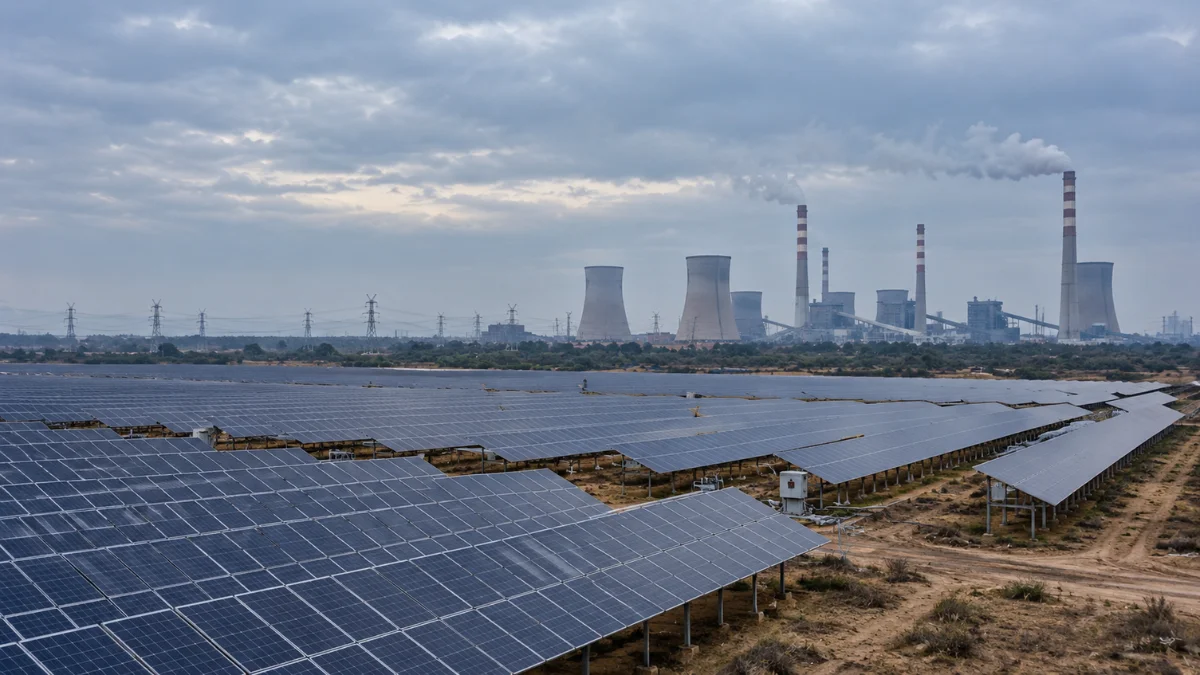
The higher demand forecast does not produce a clean transition curve. McKinsey expects regional coal demand to stay broadly flat over the next decade, with growth in India and Southeast Asia cancelling out China's decline. Coal now looks set to remain in Asia's mix longer than the firm previously assumed. Gas growth is projected to slow over the next five to ten years as power planners favour coal and renewables, though industrial use could lift consumption later. Solar and wind investment is put at about $300 billion a year through 2040, led by India and Southeast Asia. McKinsey also sees room for state-backed, higher-cost upstream oil and gas development in China, the Philippines, Thailand, Vietnam and Turkmenistan.
India's Transition Is Additive, Not Substitutive
India appears in the forecast twice: as a lead market for new solar and wind capital, and as the main reason Asian coal demand does not fall. On McKinsey's numbers, new renewable capacity in India sits alongside coal growth this decade rather than replacing it. That leaves lenders and ESG funds with coal exclusion policies facing a growth market where thermal power remains structurally embedded. The supply security logic is already visible in New Delhi's own policy choices. Climate Watch reported on October 26 that India is offering interest-free repayment terms to attract deepwater oil explorers, a move consistent with McKinsey's upstream thesis even though India is not on its list.
A Requirement Is Not a Commitment
The $1 trillion figure describes need, not capital already allocated. Delivery risk is material. A Bain and Standard Chartered study found that 50% to 60% of renewable projects in Vietnam, Thailand and Indonesia were cancelled or stalled between 2021 and 2025, with weak infrastructure and policy support among the causes. McKinsey's published findings also leave a gap for Indian readers. They do not split the $1 trillion by country, so India's share of the requirement, and of the $300 billion renewables figure, is not yet quantified.
What to Watch
The first marker is whether McKinsey releases a country breakdown that sizes India's share of the annual requirement. The second is how much of China's coal decline India absorbs in practice, which new thermal capacity approvals over the next year will show more clearly than any forecast. The third is whether Southeast Asian project attrition eases, since the $300 billion renewables figure assumes projects reach financial close at rates the region has not yet achieved.
For more climate news click here