Carmakers' Scope 1 Problem: Maruti Tests Hydrogen Against Process Fuel Emissions
India's largest carmaker is testing whether surplus solar can be banked as hydrogen and burned as factory fuel, a direct attack on the Scope 1 emissions that renewable power purchases cannot reach.***
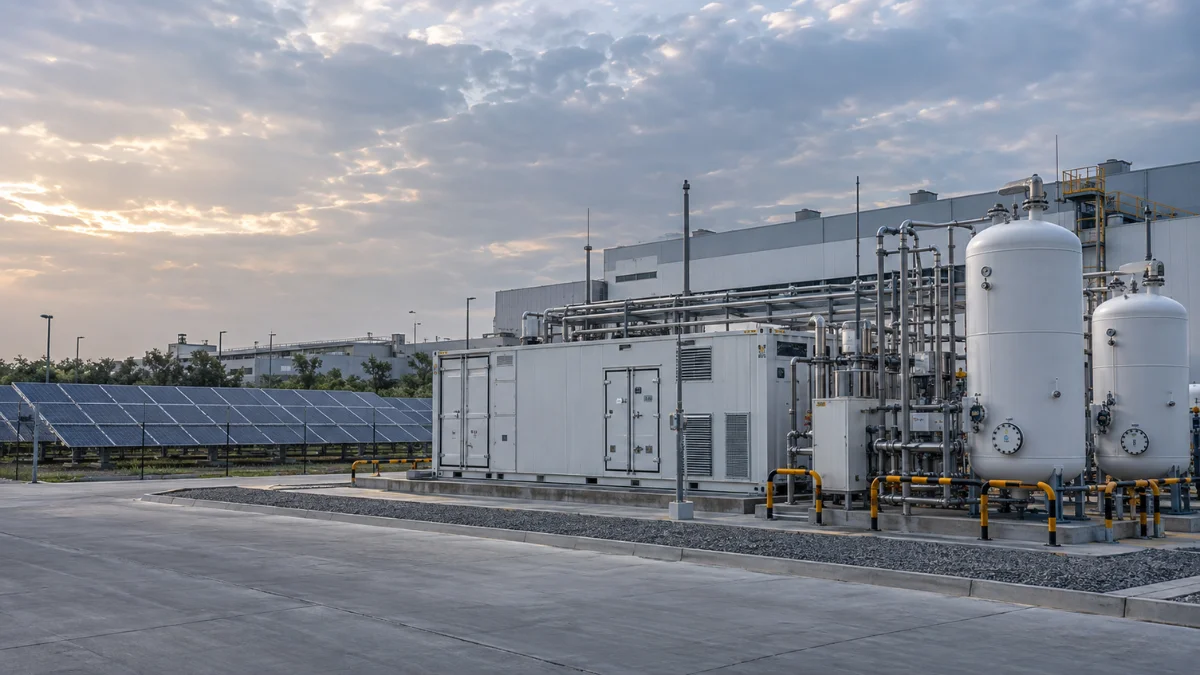
Solar electricity that Maruti Suzuki's Manesar plant generates on factory holidays, when production lines sit idle, will now be converted into green hydrogen, stored, and blended into the natural gas that fires its manufacturing processes. The 300 kW electrolyser pilot was commissioned on September 24, 2026.
Process Heat Is the Harder Half of Factory Decarbonisation
Carmakers can clean up their electricity by signing solar and wind contracts. Process fuel is more stubborn. Natural gas burned on site is a direct emission, and no grid tariff or renewable certificate offsets it.
That is the gap this pilot targets. According to company disclosures reported by Business Standard, Maruti aims to cut its manufacturing carbon footprint from 615,000 tonnes to 266,000 tonnes by FY 2030-31, a reduction of roughly 57%. Electricity measures alone will not close a gap of that size. The fuel line has to move too.
What Maruti Has Built, and What It Has Not Disclosed
The Manesar unit runs on solar power the plant would otherwise waste. Hydrogen is produced when output exceeds demand, stored, and later mixed with natural gas as process fuel. Maruti has said it will use the pilot's results to decide on wider deployment across its Haryana and Gujarat facilities.
Several numbers are missing. The company has not published daily hydrogen output, the blend ratio, the electrolyser supplier, capital cost, or expected emissions savings. As a Climatora estimate, a 300 kW electrolyser at typical efficiency of 50 to 55 kWh per kilogram would produce around 130 to 145 kg of hydrogen a day at full load. Because this unit runs mainly on holiday surplus, actual annual output will be well below that ceiling.
The project sits inside a larger spending plan. Maruti has earmarked ₹925 crore for green energy by FY 2030-31. Its solar installations reached 79 MWp by June 2026 against a target of 319 MWp equivalent by FY 2030-31, according to ESG News. A 10 tonne-per-day biogas plant at Kharkhoda, due in FY 2026-27, is expected to meet about 20% of that plant's gas demand and avoid 9,490 tonnes of CO2 a year. A 1 MWh battery storage system is already running at Kharkhoda.
Hydrogen as Storage, Not Just Fuel
The more useful signal is the design logic. Maruti is testing two routes for surplus solar at once: batteries at Kharkhoda and hydrogen at Manesar. Batteries shift power by hours. Hydrogen can hold energy across a holiday weekend and return it as heat, which is the form a process line actually uses.
Managing Director and CEO Hisashi Takeuchi said the plant "is aligned with the government of India's Green Hydrogen Mission." The National Green Hydrogen Mission, approved in January 2023 with an outlay of ₹19,744 crore, targets 5 million tonnes of annual production by 2030. Most of that volume is expected from refineries, fertiliser and steel. Captive, behind-the-meter use by manufacturers is a smaller and less visible segment.
For Maruti's peers, the pilot sets a reference point. Tata Motors, Mahindra and Hyundai India face the same process-fuel problem and the same investor questions under SEBI's Business Responsibility and Sustainability Reporting framework. If Maruti publishes clear cost and abatement data, it hands the sector a benchmark. If it does not, the project remains a demonstration.
Scale also matters. At 300 kW, the hydrogen unit is modest next to the Kharkhoda biogas plant, which has a disclosed abatement figure. On current information, biogas looks like the heavier lever for Maruti's gas-related emissions, with hydrogen as the experiment.
What to Watch
Three disclosures will show whether this pilot scales. First, whether Maruti reports hydrogen output and CO2 avoided in its FY 2026-27 Business Responsibility and Sustainability Report. Second, whether the Haryana and Gujarat rollout comes with a named capacity and timeline. Third, whether the blend ratio rises beyond pilot levels, since higher blends require burner and safety upgrades that would signal real commitment.
For more climate news click here