China’s Emissions Fall 3.1% as India’s Industry Pushes CO2 Higher
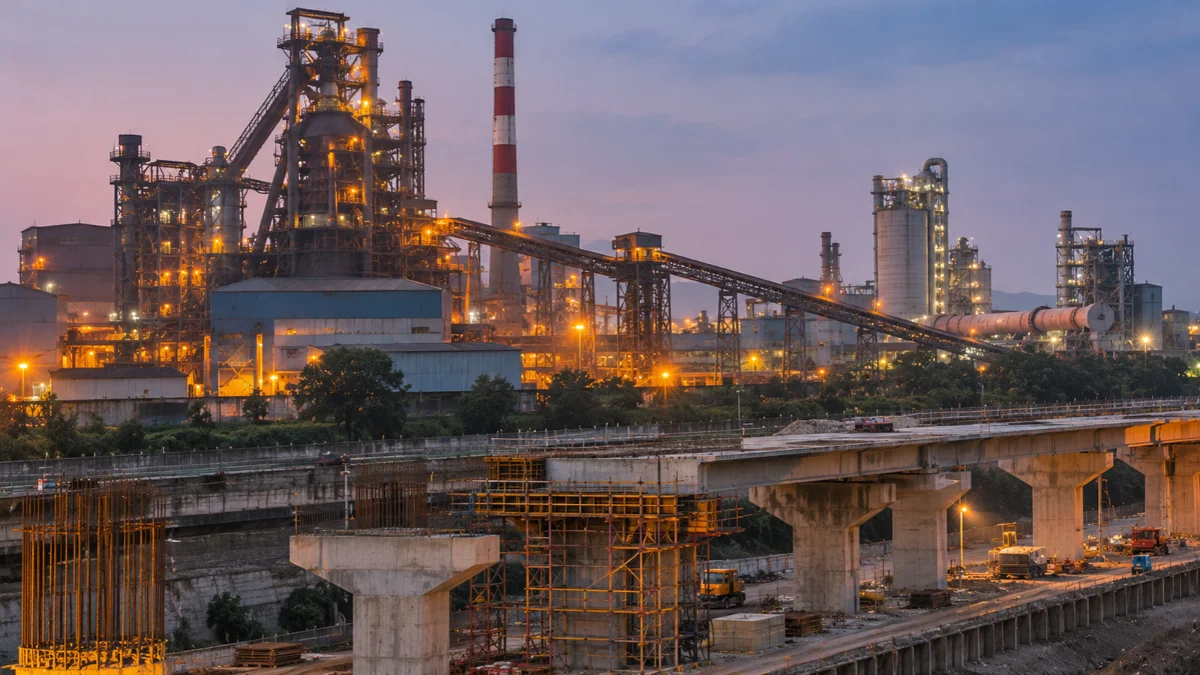
China’s emissions are falling partly because its construction boom is ending, while India’s are rising because its construction boom is accelerating, and that leaves Indian steel and cement carrying the country’s emissions trajectory.
China’s carbon dioxide emissions fell 3.1% year on year in July to September 2026, the largest quarterly reduction since the 2022 Covid lockdowns, according to an analysis for Carbon Brief by Lauri Myllyvirta of the Centre for Research on Energy and Clean Air (CREA). India, assessed by the same research group, is moving the other way: its total emissions rose 3.7% in the first half of 2026, even as its power sector held flat.
China’s Fall Mixes Structure With Circumstance
The structural drivers in China are substantial. Solar, wind and nuclear generation rose 110 TWh year on year in the quarter, roughly Germany’s total power output over the same period and more than twice the growth in electricity demand. Coal-fired generation fell 3.3%. Electric vehicles took a record 67% of passenger car sales and 50% of heavy truck sales in September, and transport oil use dropped 9%.
Not all of the decline will last. The analysis notes that exceptionally mild weather and weaker GDP growth slowed demand, while the Hormuz crisis kept oil prices high and squeezed coal-to-chemicals margins. Emissions are down only about 0.5% so far this year. Myllyvirta expects clean power to outpace total energy demand growth in 2026, “maintaining the structural fall” in fossil fuel use, with the outlook dependent on clearing grid barriers that waste clean output.
A third driver matters most for India. Emissions from Chinese steel and cement fell as the country’s construction contraction accelerated.
India’s Power Transition Works, Its Industry Does Not Yet
CREA’s analysis of India for Carbon Brief, covering the first half of 2026, shows the power sector has done its share. Power-sector emissions were unchanged from the first half of 2024. India added 77 GW of solar, 11 GW of wind and 5 GW of hydropower over those two years, against 8.5 GW of coal, and clean sources supplied about 70 TWh of new generation, more than covering the 63 TWh rise in output.
Industry is moving in the opposite direction. Steel and cement emissions rose 8% year on year, with steel output up 8% and cement up 9%, and the two sectors now account for 23% of India’s total CO2. Oil demand fell 1.3% and oil and gas emissions dropped 7%, so the national increase traces largely to heavy industry.
The periods differ, a quarter for China and a half-year for India, so the figures show direction rather than a like-for-like comparison. The direction is clear. Building activity is lowering emissions in one economy and raising them in the other.
The Emissions Question Moves From Grid to Factory
For Indian policymakers, the result shifts attention from the grid to the plant floor. Steel and cement output will keep rising with infrastructure spending, so the lever is emissions intensity per tonne rather than volume. That places the burden on the instruments already aimed at these sectors: intensity targets under the Carbon Credit Trading Scheme, Business Responsibility and Sustainability Reporting (BRSR) disclosures for listed producers, and exposure to the EU’s Carbon Border Adjustment Mechanism for exporters.
China’s contraction also changes the competitive picture. Excess Chinese steel capacity, freed by weaker domestic construction, adds pressure on export markets where Indian producers compete, at the moment those producers are being asked to decarbonise.
What to Watch
The first test is whether China’s fourth-quarter data confirms a full-year decline once weather and oil-price effects fade. The second is CREA’s next India update, which will show whether industrial emissions growth continues as construction demand rises. The third is policy: whether the Carbon Credit Trading Scheme’s intensity targets for steel and cement tighten enough to slow emissions growth from India’s fastest-growing sectors.
For more climate news click here