Karnataka Doubles Power Capacity Target as Demand Set to Double
Karnataka is betting that renewable capacity, not new thermal build-out, will carry the state through a decade of rising demand.
Karnataka's energy department has set a target to raise the state's installed power capacity from more than 39 GW today to 66 GW by 2030, with clean energy sources accounting for most of the addition. The target was outlined at the Bharat Electricity and Indian Utility Week 2026 summit in New Delhi on September 6.
Demand Growth, Not Just Climate Policy, Is Driving the Target
Gaurav Gupta, Additional Chief Secretary of Karnataka's Energy Department, framed the expansion around load growth rather than emissions targets alone. Industrial expansion, EV adoption, and data center development are the three drivers officials cited for the state's demand outlook. Karnataka's current generation mix already leans clean: hydropower and renewables together make up roughly two-thirds of its more than 39 GW of installed capacity.
Solar, Wind, and Storage Carry the Build-Out
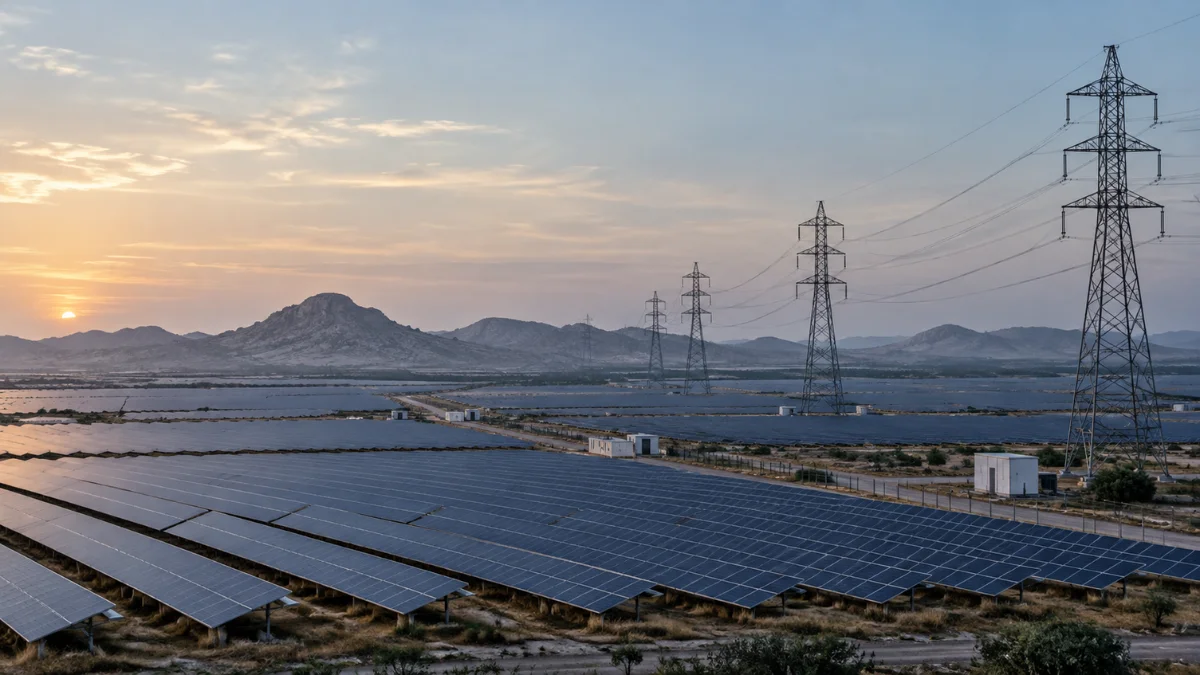
Divya Prabhu, Managing Director of the Karnataka Renewable Energy Development Ltd (KREDL), pointed to specific projects rather than aggregate targets. Plans include expansion of the Pavagada Solar Park, continued wind capacity additions, and solarization of agricultural feeders to cut discom subsidy exposure on farm power. Battery energy storage systems and the 2,000 MW Sharavathy Pumped Storage Project are the state's largest firming commitments to date.
Storage Investment Signals a Grid-Balancing Problem
Pairing a pumped storage project of that scale with BESS deployment suggests Karnataka's planners are treating firm capacity as a parallel constraint to raw megawatts, not an afterthought. A grid absorbing this much variable renewable generation needs dispatchable backup to avoid curtailment during peak solar and wind hours. That positions Sharavathy's construction and financing timeline as a bottleneck as consequential as the generation targets themselves.
What This Signals for Developers and Discoms
A state-level target of this scale, layered on top of national renewable purchase obligations, gives solar and wind developers a longer visibility window for site selection and power purchase agreements in Karnataka specifically. It also raises the state's transmission and distribution investment requirement, since 66 GW of capacity cannot reach industrial and data center load without matching grid augmentation. The unresolved question is financing: KREDL has not yet published a year-by-year tender schedule or specified how much of the buildout depends on private capital versus state and central budgetary support.
Gupta said "electricity demand in Karnataka is expected to double over the coming decade," tying the capacity target directly to that load forecast.
What to Watch
Whether KREDL issues a detailed tender roadmap with annual capacity blocks, rather than a single 2030 headline figure, will determine how quickly developers can act on this target. The Sharavathy Pumped Storage Project's financial close and construction timeline is the clearest near-term indicator of whether Karnataka's storage ambitions keep pace with its generation additions. Watch also for transmission augmentation announcements from the state, since capacity without matching grid capacity is a stranded asset, not a delivered target.…
For more climate news click here