SAEL Adds Solar Manufacturing Order to Its Generation and Waste-Energy Mix
NTPC Renewable Energy has awarded a module supply contract for its Chitrakoot-1 solar project to a company that will both manufacture and deliver the panels itself, a small but telling shift in how India's largest state-run developer is structuring its supply chain.
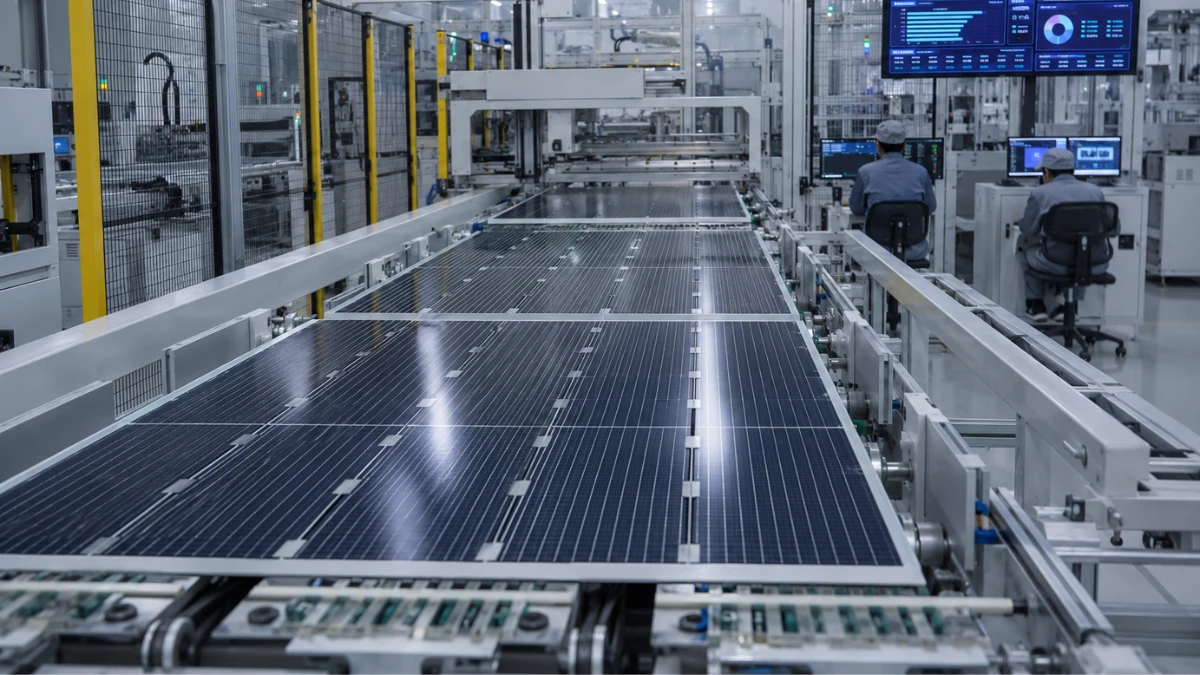
SAEL Solar P6 Private Limited, a subsidiary of SAEL Industries Limited, has secured a Letter of Award from NTPC Renewable Energy Limited (NTPC REL) to supply TOPCon solar modules for the 585.8 MWp Chitrakoot-1 solar project in Uttar Pradesh. Under the contract, SAEL will manufacture the glass-to-glass bifacial modules itself rather than sourcing them from a separate supplier, fulfilling requirements NTPC REL set out when it opened competitive bidding for the project earlier this year. The Chitrakoot block was one part of a wider 1,450 MWp tender NTPC REL floated across Uttar Pradesh, alongside two 435 MWp blocks in Lalitpur.
The contract structure matters more than the megawatt figure. NTPC REL's tender required bidders to meet minimum turnover and net worth thresholds precisely because manufacturing-and-supply contracts carry execution risk that pure trading contracts do not: a bidder who only resells modules can source from whichever factory has capacity, while a bidder who commits to manufacturing them is betting its own production line will hit deadlines. That NTPC awarded this block to a vertically integrated manufacturer rather than splitting design from supply suggests the utility is willing to accept that concentration risk in exchange for tighter quality control and ALMM (Approved List of Models and Manufacturers) compliance built into the same company that wins the contract.
For India's solar manufacturing sector, this is one more data point in a broader pattern: large public buyers increasingly favour bidders who can prove in-house production capacity over those acting purely as intermediaries. SAEL's own recent activity shows why that distinction is becoming a genuine differentiator rather than a technicality. The company commissioned 600 MWac of solar capacity in Kurnool, Andhra Pradesh in April 2026, and in June 2026 brought a 14.9 MW agri waste-to-energy plant online in Rajasthan, bringing its waste-to-energy fleet to 11 plants and 164.9 MW combined. A company operating across generation, manufacturing, and waste-to-energy simultaneously is a different counterparty risk profile than a single-product module vendor, for better or worse depending on how thinly that operational attention is spread.
What the announcement does not specify is the delivery timeline or the contract value in rupees, neither of which appears in the Letter of Award reporting. Nor is it clear whether SAEL's existing manufacturing capacity has headroom for this order alongside its other commitments, or whether Chitrakoot-1 will require a capacity expansion first. Given that NTPC REL's own tender documents required bidders to demonstrate a minimum turnover proportional to quoted capacity, presumably SAEL cleared that bar, but the underlying production schedule that would let an investor judge execution risk is not public.
What to Watch
→ Whether NTPC REL discloses a commissioning timeline or contract value for the Chitrakoot-1 award
→ Whether SAEL's manufacturing capacity utilisation data becomes public, given its expanding commitments across solar generation, module supply, and waste-to-energy
→ Whether NTPC REL's remaining Lalitpur blocks (2 x 435 MWp) go to vertically integrated bidders following the same pattern, or to separate supply-only vendors
For more climate news - https://climatora.com/climate-watch