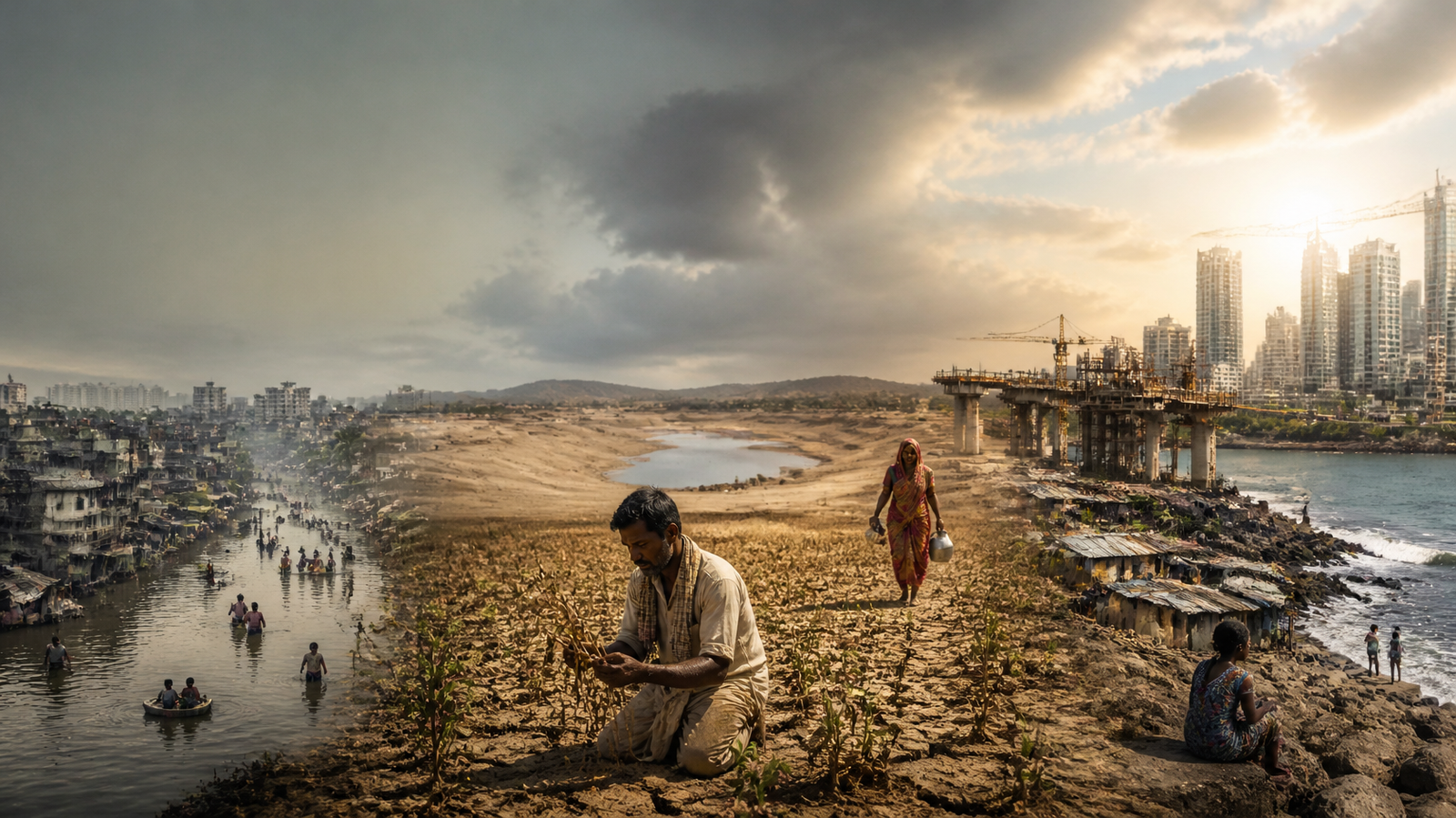
2027 Could Be Another Defining Year for Climate Resilience
Climate change is no longer a distant environmental threat. It is increasingly influencing the cost of food, the availability of water, the security of livelihoods, the stability of infrastructure and the economic prospects of nations. As the world moves into 2027, the challenge will not simply be about managing rising temperatures. It will be about dealing with the cascading consequences of climate change across interconnected systems. The World Meteorological Organization's November 2026 State of the Climate Update warns that a strong El Niño is expected to increase the risks of extreme heat, drought and heavy rainfall well into 2027. Meanwhile, UNEP's latest Adaptation Gap Report highlights a widening gap between the financial resources available to developing countries and the investment required to protect their people and economies. These developments point towards three major challenges that deserve particular attention.
1. Extreme Weather Will Put Lives, Infrastructure and Livelihoods Under Greater Pressure
The first major challenge will be the growing intensity and interconnected nature of extreme weather events. Heatwaves, droughts, floods, cyclones and wildfires are not isolated environmental incidents. They can disrupt electricity systems, damage infrastructure, reduce agricultural productivity, affect public health and displace communities. The climate outlook for 2027 deserves particular attention because of the strong El Niño event currently underway. According to the WMO's September 2026 update, El Niño is expected to persist into early 2027. Its influence on ocean and atmospheric circulation can alter regional rainfall and temperature patterns, increasing the risk of drought in some areas and excessive rainfall in others. The precise regional impacts remain uncertain, but the potential consequences are significant.
What could this mean for the Global South?
- South Asia: Heat stress, irregular monsoon patterns, urban flooding and pressure on agricultural livelihoods.
- Sub-Saharan Africa: Greater vulnerability to drought, water shortages, crop losses and food insecurity in already exposed regions.
- Small Island Developing States: Increased exposure to coastal flooding, storm surges, erosion and sea-level rise.
- Latin America: Risks associated with drought, water availability, wildfires and disruption to agricultural production.
- Coastal regions: Greater exposure to storm surges, flooding and damage to settlements and infrastructure.
The WMO's November 2026 report also highlights record-high global mean sea levels and ocean heat, adding to concerns about coastal and marine ecosystems. The consequences extend beyond immediate physical damage. Extreme heat can reduce outdoor worker productivity, increase health risks and place electricity grids under pressure. Flooding can interrupt transport, education, healthcare and essential services. Drought can affect farmers, livestock owners and communities dependent on natural water systems. For countries with large informal workforces and limited social protection, these disruptions can have particularly severe economic consequences.
The challenge for 2027: Countries will need to move beyond disaster response towards climate-resilient infrastructure, stronger early-warning systems, heat action plans, better urban planning and local adaptation strategies.
2. Food and Water Insecurity Will Become a More Pressing Economic and Social Challenge
The second major challenge will be the growing pressure on food systems and freshwater resources. Climate change affects food production through rising temperatures, changing rainfall patterns, soil degradation, water stress, pest outbreaks and extreme weather events. Agriculture is particularly vulnerable because it depends on climatic conditions that are becoming increasingly unpredictable. The impact is not restricted to farmers. Disruption to agricultural production can influence food prices, supply chains, nutrition, employment and national economic stability.
Why food security is at risk A combination of climate-related factors could intensify pressure on food systems in 2027:
- Heat stress: High temperatures can reduce crop yields, affect livestock health and lower agricultural labour productivity.
- Unpredictable rainfall: Irregular rainfall can disrupt sowing cycles, increase crop failure risks and complicate farm planning.
- Water scarcity: Competition between agricultural, industrial and domestic water requirements can intensify.
- Soil degradation: Erosion, salinity and declining soil health can reduce agricultural productivity.
- Supply-chain disruption: Extreme weather can damage roads, storage facilities and transport networks, affecting the movement of food.
For many countries in the Global South, these risks are especially important because agriculture remains a significant source of employment and livelihood. India, for example, has a large agricultural workforce and substantial dependence on monsoon rainfall. Changes in rainfall distribution, prolonged dry spells and extreme heat can affect farmers, food production and rural incomes.
The water crisis is equally important
Climate change is also altering the availability and reliability of freshwater resources. Glacier retreat, changing precipitation patterns, prolonged droughts, groundwater depletion and saltwater intrusion are affecting water security in different parts of the world. Urban populations may face increasing competition for water, while rural communities can experience reduced agricultural productivity and greater pressure on local water sources. Water insecurity can also create wider social and economic consequences:
- Reduced agricultural output and rural incomes.
- Higher costs of food production and water supply.
- Increased pressure on women and vulnerable communities responsible for water collection.
- Disruption to industrial operations.
- Greater public health risks where access to safe water and sanitation is limited.
The challenge for 2027: Food and water security must become central to climate adaptation planning. Investments in climate-resilient agriculture, efficient irrigation, watershed restoration, rainwater harvesting, groundwater management, soil conservation and resilient food supply chains will be essential. The focus must shift from simply producing more food to building food systems that can withstand environmental uncertainty.
3. The Climate Finance Gap Will Deepen Inequality Between Nations
The third challenge may prove to be the most consequential because it determines how effectively countries can respond to the first two. Climate adaptation requires investment. Building flood-resilient infrastructure, strengthening public health systems, improving agricultural practices, developing early-warning systems and protecting coastal communities all require financial resources. Yet the countries most exposed to climate impacts often have the least fiscal capacity to respond. This creates a fundamental inequality in the climate crisis: the ability to adapt is increasingly influenced by the ability to pay. UNEP's Adaptation Gap Report 2026: Ready? Not provides a stark illustration of this problem. The report estimates that international public adaptation finance flows to developing countries reached approximately US$28.2–31.7 billion in 2024. However, developing countries will require an estimated US$305 billion annually by 2035 to meet their adaptation needs. Even if the international aspiration to triple public adaptation finance by 2035 is achieved, it would cover only around 20–29% of estimated requirements. The gap is substantial.
Why does this matter for the Global South?
Many developing economies are already managing competing priorities, including poverty reduction, infrastructure development, healthcare, education, employment generation and energy security. Climate-related disasters add another layer of expenditure. A country recovering from a major flood or cyclone may need to divert public funds from long-term development programmes towards rebuilding roads, homes, schools, hospitals and essential infrastructure. For countries with high debt burdens, this can create a difficult cycle:
- Climate disasters damage infrastructure and economic assets.
- Governments need additional funds for relief and reconstruction.
- Public borrowing and fiscal pressure may increase.
- Investment in long-term climate adaptation can be delayed.
- Vulnerability to future disasters remains high.
The challenge is compounded by the difficulty many developing countries face in accessing international climate finance. Complex application processes, limited institutional capacity, project preparation requirements and inadequate technical expertise can prevent available funding from reaching communities that need it.
Loss and damage adds another dimension
Some climate impacts cannot be fully prevented through mitigation or adaptation. When communities lose homes, livelihoods, land or cultural heritage due to climate-related events, they require support to recover and rebuild. UNEP's 2026 report highlights the substantial shortfall in loss-and-damage financing. The first funding round of the Fund for Responding to Loss and Damage received requests amounting to US$2.8 billion against an initial funding envelope of US$342 million. This illustrates the scale of the challenge.
The challenge for 2027: Climate finance must become more accessible, predictable and responsive to the needs of developing countries. Governments, multilateral development banks, private investors and international institutions will need to work towards financing models that support adaptation, resilience and recovery without increasing unsustainable debt burdens.
Climate finance should be measured not just by the money pledged, but by the projects delivered, communities protected and losses avoided.
Why These Three Challenges Are Connected
Extreme weather, food and water insecurity, and the climate finance gap are not separate problems. They reinforce one another. A drought can reduce agricultural output, increase food prices and lower rural incomes. The resulting economic stress can make it harder for communities and governments to invest in adaptation. A subsequent extreme weather event can deepen the same vulnerabilities. This creates a cycle in which climate impacts increase economic vulnerability, and economic vulnerability reduces the capacity to respond to climate impacts. The Global South is particularly exposed to this interconnected challenge, although the degree of vulnerability varies considerably between countries, regions and communities.
The response therefore needs to be integrated rather than fragmented.
What Should Countries and Businesses Prioritise in 2027?
The emerging climate risks call for action across five areas:
1. Strengthen climate preparedness: Invest in early-warning systems, disaster preparedness, heat action plans and climate-resilient infrastructure.
2. Protect food and water systems: Promote climate-smart agriculture, watershed management, soil restoration, water efficiency and resilient supply chains.
3. Make climate finance accessible: Improve project preparation, strengthen local institutions and develop financing mechanisms that reach vulnerable communities.
4. Build climate-ready businesses: Encourage companies to assess physical climate risks, strengthen supply-chain resilience, reduce emissions and invest in resource efficiency.
5. Develop local capabilities: Equip communities, professionals, MSMEs and public institutions with the knowledge and skills required to implement climate adaptation and mitigation measures.
2027 Must Be About Building Resilience, Not Just Managing Disasters
The climate challenge facing the world in 2027 will be defined not only by the intensity of extreme weather events, but also by the ability of nations and communities to withstand their consequences. For the Global South, the stakes are particularly high. Climate impacts can reverse development gains, deepen inequalities, threaten livelihoods and place additional pressure on already constrained public finances. But vulnerability is not destiny. Investments in resilient infrastructure, sustainable agriculture, water security, climate finance, green skills and responsible business practices can help countries prepare for an uncertain future.
- For businesses, this means looking beyond carbon emissions and understanding how climate risks can affect operations, suppliers, employees and communities.
- For educational institutions, it means building climate literacy and developing the skills needed to respond to environmental challenges.
- For governments, it means making resilience a central part of economic and development planning.
- And for citizens, it means recognising that climate action is closely connected to everyday decisions about energy, water, food, consumption and waste.
The defining question for 2027 should not be how the world will cope with the next climate disaster. It should be how much better prepared we will be before it happens.
At Climatora, we believe that climate resilience begins with awareness, becomes possible through capability building and delivers results through measurable action.
Frequently Asked Questions (FAQs)
1. What are the biggest climate change challenges expected in 2027?
Three major challenges are the growing risk of extreme weather, increasing pressure on food and water security, and the widening gap in climate adaptation finance, particularly for developing countries.
2. Why is the Global South more vulnerable to climate change?
Many countries in the Global South have high exposure to climate hazards, significant dependence on climate-sensitive livelihoods and infrastructure gaps. Limited financial and institutional capacity can also make preparation, adaptation and recovery more difficult.
3. How will El Niño affect climate conditions in 2027?
A strong El Niño is expected to influence temperature and rainfall patterns into early 2027. It can increase the risk of extreme heat, drought and heavy rainfall in different regions. Actual impacts will depend on regional climate conditions and seasonal weather patterns.
4. How will climate change affect food security?
Climate change can affect agricultural productivity through heat stress, irregular rainfall, droughts, floods, soil degradation and water scarcity. These impacts can disrupt food supply chains, increase prices and threaten livelihoods.
5. What is the climate finance gap?
The climate finance gap refers to the difference between the financial resources required to address climate change and the funding currently available. UNEP estimates that developing countries will need around US$305 billion annually for adaptation by 2035, significantly more than current international public adaptation finance flows.
6. What can businesses do to prepare for climate risks in 2027?
Businesses can conduct climate-risk assessments, measure emissions, strengthen supplier resilience, improve energy and water efficiency, develop business continuity plans and train employees in sustainability and climate risk management.
7. What is the difference between climate mitigation and adaptation?
Climate mitigation involves reducing greenhouse gas emissions or increasing carbon removals to limit global warming. Climate adaptation involves adjusting systems, infrastructure and practices to reduce the harm caused by current and expected climate impacts. Both are essential.
References Source:
- WMO – State of the Climate Update for COP31 (9 November 2026): Global temperature, ocean heat, sea-level trends and El Niño-related risks extending into 2027.
- WMO – El Niño set to become very strong (3 September 2026): Forecast implications for rainfall, drought and extreme heat through early 2027.
- UNEP – Adaptation Gap Report 2026 (4 November 2026): Adaptation finance requirements, developing-country vulnerabilities and loss-and-damage funding gaps.
- OECD – Climate Action Monitor 2026: Changing climate hazards, economic costs and differences in exposure and preparedness.